
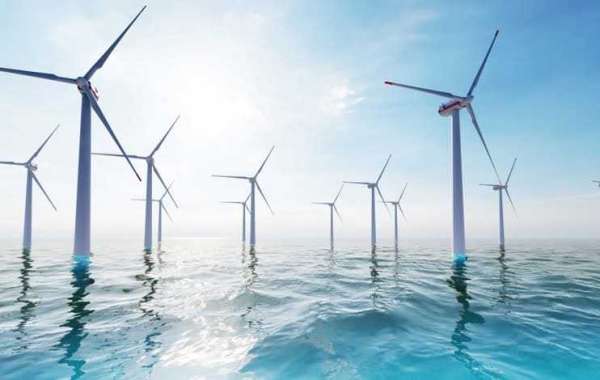
The global shift toward renewable energy has intensified interest in offshore wind, also referred to as ocean wind farms. Positioned in seas and oceans where wind speeds are higher and more consistent, ocean wind farms have emerged as a vital solution to meet rising energy demands while curbing greenhouse gas emissions. Unlike land-based wind farms, offshore projects benefit from stronger, steadier winds, allowing for higher power generation efficiency.
The ocean wind farm market has grown significantly in recent years, driven by supportive government policies, technological advancements, and the urgent need to transition away from fossil fuels. The International Energy Agency (IEA) projects that offshore wind will become a USD 1 trillion industry by 2040 if global ambitions align with net-zero carbon targets. With Europe leading the charge, followed by rapid expansions in Asia-Pacific and North America, the market is set for dynamic growth.
This article explores the current status, key drivers, technologies, challenges, opportunities, and future outlook for the ocean wind farm market.
Click Here to Download a Free Sample Report
Market Overview
Ocean wind farms consist of wind turbines installed in coastal waters, either on fixed foundations in shallow seas or on floating platforms in deeper waters. These turbines generate electricity by converting wind’s kinetic energy into mechanical power and then into electricity. The electricity is transmitted to onshore grids via subsea cables.
Globally, installed offshore wind capacity surpassed 64 GW in 2023, with expectations of exceeding 250 GW by 2030 and 1,000 GW by 2050, according to Global Wind Energy Council (GWEC).
Key trends include:
- Europe as the pioneer: The UK, Germany, Denmark, and the Netherlands are global leaders in offshore wind, supported by ambitious renewable energy targets.
- Asia-Pacific growth: China, Taiwan, Japan, and South Korea are rapidly scaling ocean wind farms. China alone installed more than half of new global capacity in 2022.
- North America emergence: The U.S. has launched several large-scale offshore projects, particularly along the East Coast, with federal and state incentives in place.
Market Drivers
- Rising Demand for Clean Energy
Countries are committing to net-zero emissions targets by 2050. Ocean wind farms are critical in replacing coal and natural gas power generation.
- Government Policies and Subsidies
Feed-in tariffs, tax credits, and renewable energy mandates have made investments in ocean wind viable. For instance, the U.S. Inflation Reduction Act offers substantial tax incentives for offshore wind developers.
- Technological Advancements
Innovations in turbine size (up to 15–20 MW per turbine), floating wind platforms, and subsea cabling have reduced the levelized cost of electricity (LCOE) from offshore wind.
- Energy Security
The Russia-Ukraine conflict highlighted vulnerabilities in energy imports. Ocean wind farms provide countries with greater independence and stable domestic energy production.
- Growing Corporate Investments
Corporations such as Google, Amazon, and Microsoft are procuring renewable energy from offshore wind projects to meet sustainability goals.
Market Challenges
- High Capital Expenditure
Building offshore wind farms requires billions of dollars, with costs associated with marine construction, subsea cabling, and specialized vessels.
- Grid Integration
Integrating intermittent offshore wind energy into national grids demands robust transmission infrastructure and storage solutions.
- Environmental Concerns
Critics highlight potential impacts on marine ecosystems, fisheries, and bird populations, requiring careful environmental assessments.
- Technical Barriers in Deep Waters
While floating platforms offer solutions, they remain costly and are still in early commercial stages.
- Supply Chain and Skilled Workforce Shortages
The rapid expansion of ocean wind farms is creating bottlenecks in turbine manufacturing, installation vessels, and skilled engineers.
Technological Innovations
- Floating Wind Farms
Traditional offshore wind farms are limited to shallow waters. Floating platforms extend projects to deeper seas, unlocking vast new areas for development. Projects like Equinor’s Hywind Scotland demonstrate viability.
- Larger Turbines
GE’s Haliade-X and Siemens Gamesa’s SG 14-236 DD turbines can generate up to 15–20 MW each, increasing output while reducing costs per MW.
- Energy Storage Integration
Combining offshore wind with battery storage or hydrogen production ensures reliability and reduces intermittency issues.
- Advanced Grid Infrastructure
High-voltage direct current (HVDC) systems allow efficient long-distance transmission from ocean farms to urban centers.
- Digitalization and Predictive Maintenance
Artificial intelligence (AI), drones, and digital twins are improving turbine efficiency, monitoring, and reducing downtime.
Market Segmentation
By Foundation Type
- Fixed-bottom turbines (dominant in Europe, shallow waters)
- Floating turbines (growing in Japan, U.S. West Coast, and Mediterranean Sea)
By Capacity
- Small-scale (<100 MW)
- Medium-scale (100–500 MW)
- Large-scale (>500 MW)
By Application
- Commercial power generation
- Corporate power purchase agreements (PPAs)
- Hybrid projects (wind + hydrogen or storage)
By Region
- Europe: UK, Germany, Netherlands, Denmark (largest market).
- Asia-Pacific: China, Japan, South Korea, Taiwan (fastest growth).
- North America: U.S., Canada (emerging).
- Rest of World: Brazil, South Africa exploring projects.
Competitive Landscape
Leading companies in the ocean wind farm market include:
- Ørsted A/S (Denmark) – World’s largest offshore wind developer.
- Siemens Gamesa Renewable Energy (Spain/Germany) – Leading turbine manufacturer.
- Vestas Wind Systems (Denmark) – Key supplier of onshore and offshore turbines.
- GE Renewable Energy (U.S.) – Developer of Haliade-X, the most powerful turbine.
- Equinor ASA (Norway) – Pioneer in floating offshore wind.
- RWE Renewables (Germany) – Strong offshore portfolio.
- China Three Gorges Corporation (China) – Leading Chinese developer.
- MHI Vestas Offshore Wind (Japan/Denmark).
- Shell, BP, and TotalEnergies – Oil & gas majors investing heavily in offshore wind transition.
Regional Insights
Europe
Europe dominates with more than 60% of global offshore capacity. The UK is the largest market, with projects like Hornsea One & Two, the world’s largest offshore wind farms.
Asia-Pacific
China leads globally in annual installations, while Japan and South Korea are advancing floating offshore projects. Taiwan has positioned itself as an offshore wind hub with favorable policies.
North America
The U.S. has ambitious goals to install 30 GW of offshore wind by 2030, with projects like Vineyard Wind and Empire Wind under development.
Rest of the World
Emerging markets include Brazil, Vietnam, and South Africa, which are exploring large-scale potential due to strong coastal wind resources.
Future Opportunities
- Hydrogen Production from Offshore Wind
Excess wind energy can power electrolysis to produce green hydrogen, creating new revenue streams. - Hybrid Offshore Projects
Combining wind, solar, and wave energy for enhanced generation. - Deepwater Expansion
Floating wind farms will unlock massive new areas, particularly in Japan, Norway, U.S. West Coast, and Mediterranean Sea. - Corporate PPA Growth
Large corporations are increasingly signing power purchase agreements with offshore projects to secure green energy. - Emerging Markets
Asia-Pacific, South America, and Africa offer untapped potential for developers.
Market Outlook
The ocean wind farm market is projected to grow at a CAGR of 15–20% from 2024 to 2033, making it one of the fastest-growing renewable energy segments. Cost reductions, improved technology, and policy support will continue to drive growth. By 2050, offshore wind could provide 10–15% of global electricity demand.
The transition to next-generation floating wind farms and integration with green hydrogen will revolutionize the sector. While challenges remain in costs, environmental impacts, and supply chain bottlenecks, the long-term trajectory is firmly upward.
Conclusion
The ocean wind farm market represents a cornerstone of the global clean energy revolution. With the potential to deliver vast amounts of carbon-free electricity, ocean wind farms are reshaping energy systems, creating jobs, and supporting the fight against climate change. Europe continues to lead, Asia is expanding rapidly, and North America is catching up with ambitious policies.
As turbine sizes grow, floating technology matures, and integration with hydrogen and storage advances, ocean wind farms are set to become a mainstream energy source powering millions of homes and industries.
The future of energy is offshore, and the ocean wind farm market is at the forefront of this transformation.