
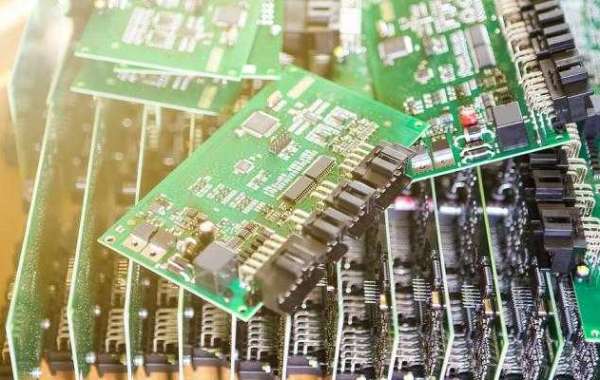
The global automotive industry is undergoing a remarkable transformation driven by electrification, digital connectivity, and advanced safety technologies. At the center of this evolution lies the Automotive Printed Circuit Board (PCB) — the structural foundation that powers electronic systems inside vehicles. From engine management units and battery control systems to infotainment displays and advanced driver assistance features, PCBs are indispensable components enabling intelligent vehicle performance.
As modern vehicles transition from mechanical to electronic architectures, the demand for compact, reliable, and high-performance PCB solutions has surged. This strong momentum is propelling the Automotive PCB Market into a high-growth phase, supported by continuous innovation and expanding application areas. This article explores the market dynamics, technological trends, key drivers, challenges, and future outlook shaping the global automotive PCB ecosystem.
Click Here to Download a Free Sample Report
What is an Automotive PCB?
A printed circuit board is a layered structure composed of conductive copper traces and insulating substrates. It provides mechanical support and electrical pathways for electronic components, ensuring seamless signals and power delivery throughout vehicle systems.
Automotive PCBs must withstand:
- High temperature variations
- Vibration and shock
- Humidity and harsh chemicals
- Long operating cycles
Therefore, the automotive sector employs more durable materials and strict design standards compared to consumer electronics.
Types of Automotive PCBs
Different automotive functions demand unique PCB designs. The major types used in vehicles include:
1️⃣ Single-Sided PCBs
- Simple structure with one conductive layer
- Used in low-power control systems like lighting modules
2️⃣ Double-Sided PCBs
- Traces on two sides, allowing denser wiring
- Common in dashboard electronics, basic sensors
3️⃣ Multilayer PCBs
- Multiple stacked layers for complex circuits
- Critical for ADAS, telematics, and engine control units
4️⃣ HDI (High Density Interconnect) PCBs
- Compact, high-performance boards with micro-vias
- Enable advanced sensors, radars, and EV battery management
5️⃣ Flexible PCBs
- Bendable circuits allowing space-saving designs
- Used in displays, steering wheel electronics, airbag systems
6️⃣ Rigid-Flex PCBs
- Hybrid design combining rigidity and flexibility
- Suitable for compact assemblies in ADAS cameras and LiDARs
7️⃣ Metal Core PCBs
- Enhanced heat dissipation capability
- Ideal for LED lighting systems and power electronics
The right PCB selection depends on thermal loads, electrical complexity, and system performance requirements.
Key Role of PCBs in Modern Vehicles
Automotive PCBs enable crucial functions across several domains:
Vehicle System | PCB Function |
Powertrain | Engine control, fuel injection, EV motor control |
Safety & ADAS | Radar, cameras, airbags, collision detection |
Connectivity | Telecommunication units, navigation, telematics |
Comfort & Interiors | HVAC control, infotainment, seat adjustments |
Lighting | LED headlamps, dashboard illumination |
EV Battery Systems | Battery management, charge control, power distribution |
As cars become more intelligent, the electronics content per vehicle continues to rise, significantly boosting the demand for advanced PCB solutions.
Market Growth Drivers
1️⃣ Rapid Electrification of Vehicles
Electric vehicles (EVs) require:
- High-voltage inverters
- Battery management systems
- Charging controllers
- Thermal control systems
These systems rely heavily on HDI and metal-core PCBs, making EV expansion a primary market catalyst.
2️⃣ Surge in ADAS Technologies
Automakers are integrating:
- Adaptive cruise control
- Lane-keeping assistance
- Blind spot detection
- Autonomous emergency braking
Each feature demands more sensors and processing units, significantly raising PCB consumption.
3️⃣ Growing Popularity of In-Car Connectivity
Connected vehicle trends like:
- Smart infotainment
- Over-the-air software updates
- Vehicle-to-Everything (V2X) communications
boost demand for high-speed communication PCBs.
4️⃣ Lighting Innovations
Shift to LED and matrix headlights creates consistent demand for thermally efficient PCBs, especially metal-core variants.
5️⃣ Safety Regulations & Standards
Government-mandated safety features worldwide are pushing electronics integration in even entry-level vehicles.
Market Challenges
Despite strong growth, the industry faces some hurdles:
Challenge | Impact |
Strict automotive quality standards (ISO/TS 16949) | High manufacturing costs |
Thermal and vibration stress | Need for premium materials |
Growing circuit complexity | Pressure on PCB miniaturization |
Raw material price volatility | Margin compression for suppliers |
Skilled engineering shortage | Delays in technology development |
Reliability is non-negotiable: failures can risk lives. Thus, automotive PCB manufacturers must invest heavily in testing, certification, and engineering expertise.
Key Market Trends Shaping the Future