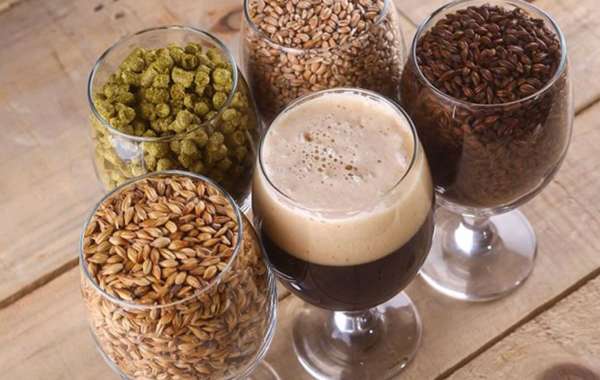
The global brewing industry is undergoing a period of rapid modernization driven by evolving consumer preferences, sustainability goals, and advances in food biotechnology. Traditional brewing methods, while rich in heritage, often require lengthy processing times and depend heavily on natural enzymatic activity from malted grains. Today, brewing enzymes have become essential tools that help breweries streamline production, create high-quality beverages, and experiment with innovative beer styles. From craft breweries to multinational beverage manufacturers, enzyme technologies are shaping an efficient, flexible, and sustainable brewing future.
This comprehensive article explores the brewing enzymes market, including current trends, growth drivers, technological innovations, regulatory aspects, and the outlook for the coming decade.
Click Here to Download a Free Sample Report
- What Are Brewing Enzymes and Why Do They Matter?
Brewing enzymes are specialized biological catalysts that accelerate and improve the biochemical reactions taking place during beer and beverage manufacturing. These enzymes occur naturally in malted barley but in limited quantities. Commercial brewing enzymes supplement or replace natural enzymes to achieve greater process control and consistency.
Key Functions of Brewing Enzymes
- Convert starch into fermentable sugars during mashing
- Break down non-starch polysaccharides to reduce viscosity
- Enhance fermentation efficiency through better yeast performance
- Improve clarity, filtration, and taste stability
- Enable brewing with alternative grains and high-adjunct recipes
By enabling faster reaction rates and thorough raw-material utilization, brewing enzymes bring both economic and sensory benefits.
- Major Types of Brewing Enzymes
The brewing enzymes market consists of multiple enzyme categories, each addressing a specific stage of the process:
Enzyme Type | Primary Function | Impact on Beer Quality |
Amylases (α-amylase & glucoamylase) | Break down starch into fermentable sugars | Higher alcohol yield, better extract efficiency |
Proteases | Hydrolyze proteins | Better foam stability and filtration |
β-Glucanases & xylanases | Reduce viscosity by breaking cell wall components | Improved lautering, faster filtration |
Pectinases | Clarification with fruit-based beers and ciders | Increased clarity and flavor extraction |
Fermentation enzymes | Improve yeast metabolism | Stable fermentation, reduced off-flavors |
Manufacturers continue to innovate new enzyme formulations that work under wider temperature and pH ranges — enabling brewers to maximize flexibility and experiment with new recipes.
- Market Growth Drivers
- a) Rising Popularity of Craft and Specialty Beers
Consumers worldwide are gravitating toward beers with distinctive flavor, aroma, and mouthfeel. Craft breweries prioritize uniqueness and creativity — using varied grains, fruits, and botanicals. Brewing enzymes help overcome processing challenges that arise from non-traditional ingredients, making them indispensable for modern recipe development.
- b) Efficiency and Cost Optimization
For large-scale breweries, operational efficiency is a major priority. Enzymes:
- Reduce mashing and brewing cycle times
- Improve raw-material extraction levels
- Lower viscosity, minimizing equipment wear
- Reduce energy and water consumption
These advantages translate into higher profitability and more sustainable production.
- c) Growth of Low-Alcohol and Non-Alcoholic Beer Segment
Younger consumers, health-focused individuals, and stricter alcohol regulations are driving demand for low-ABV or zero-alcohol beers. Enzymes help brewers create beverages with balanced sweetness, body, and flavor even with reduced alcohol production.
- d) Use of Adjuncts and Alternative Grains
In regions where barley is expensive or scarce, brewers rely on maize, rice, millet, sorghum, or cassava. Enzymes enable these adjuncts to perform like malt substitutes, ensuring consistent beer quality at lower cost.
- e) Sustainability and Waste Reduction
Brewing enzymes allow:
- More complete starch conversion → fewer unfermented residues
- Lower energy requirements due to shorter cooking and mash cycles
- Reduced water usage during lautering and filtration
Breweries striving for low-carbon production increasingly adopt enzymes as a green solution.
- Global Market Trends
Technological Advancements
- Precision enzyme formulations designed for specific beer styles (lagers, ales, wheat beers, gluten-reduced beers)
- High-temperature enzymes that remain stable in extreme conditions, enabling faster processing
- Enzymes tailored for fruit-fermented beverages, hard seltzers, and craft ciders
Expansion Into Emerging Markets
Asia-Pacific, led by China, India, Vietnam, and South Korea, is witnessing:
- Increasing beer consumption among younger demographics
- Growing craft brewing movements
- Rapid expansion of local brewing facilities
This region is expected to be the fastest-growing for brewing enzyme adoption.
Premiumization of Beer
Consumers are willing to pay more for beers with:
- Unique flavor profiles
- Natural and clean-label ingredients
- Better mouthfeel and smoothness
Enzymes enable premium characteristics without chemical additives.
Industrial Beer vs. Craft Beer Usage
Segment | Benefits of Enzyme Adoption |
Industrial breweries | Higher yields, global consistency, cost reduction |
Craft breweries | Recipe creativity, alternative ingredients, reduced production time |
Therefore, both ends of the market fuel enzyme demand — though for different motivations.
- Key Application Segments
Brewing Beer
The largest application segment, where enzymes enhance:
- Mashing
- Fermentation
- Filtration
- Flavor retention
Brewing with Adjuncts
Essential for breweries that incorporate:
- Corn, wheat, rice
- Sorghum and millet
- Starchy root crops
Cider and Fruit-Based Alcoholic Drinks
Pectinases and cell-wall-degrading enzymes improve juice extraction and clarity.
Hard Seltzers and Ready-to-Drink Beverages
Growing consumer demand pushes experimentation with sugar fermentations supported by specialized enzymes.
- Market Challenges
Despite strong growth potential, the brewing enzymes market faces several barriers:
- a) Lack of Awareness Among Small Brewers
Some microbreweries operate traditionally and may hesitate to adopt enzymatic technologies due to:
- Limited technical expertise
- Perceived cost concerns
- Fear of altering craft authenticity
- b) Regulatory Compliance
Food-grade enzymes must pass rigorous safety approvals. Documentation and regulatory differences across regions complicate market expansion.
- c) Pricing Pressure in Price-Sensitive Economies
High-quality enzyme formulations require advanced biotechnology, leading to higher upfront costs for brewers in developing markets.
- d) Consumer Shift Toward Filtered-less or Cloudy Beers
Certain beer trends, like hazy IPAs, require lower emphasis on filtration performance — temporarily affecting demand for some enzyme types.
- Competitive Landscape and Innovation Outlook
Global enzyme producers continually invest in biotechnology research to create:
- Multi-functional enzyme blends
- Vegetarian and non-allergenic enzyme sources
- Stable performance under diverse brewing conditions
Collaborations between enzyme manufacturers and breweries are rising to:
- Co-develop beer styles with enhanced sensory attributes
- Improve brewing-with-adjunct technologies
- Reduce gluten content (making beer accessible to gluten-sensitive consumers)
Some companies are also exploring enzymes that reduce alcohol while retaining flavor, an area with strong commercial promise.
- Regional Market Overview
Region | Market Status & Opportunities |
North America | Mature craft beer culture encourages enzyme innovation |
Europe | Technology-driven breweries & established enzyme producers |
Asia-Pacific | Fastest growth due to rising consumption and investment |
Latin America | Increasing use of adjuncts and local grains boosts enzyme demand |
Middle East & Africa | Modest growth; opportunities in non-alcoholic beer brewing |
Policies promoting food processing modernization and sustainability are further accelerating adoption across all regions.
- Future Opportunities
The brewing enzymes market holds remarkable potential over the next decade. Major growth opportunities include:
Low-Alcohol and Functional Beer
Enzymes enabling:
- Low-calorie beers
- High-protein or vitamin-enhanced brews
- Alcohol-free varieties without taste compromise
Circular Economy and Waste Valorization
Breweries are exploring enzymes to convert spent grains into:
- Protein-rich animal feed
- Nutraceutical ingredients
- Industrial raw materials
Precision Fermentation and AI-Optimized Brewing
Digital technologies will allow individualized enzyme dosing — ensuring maximum brewing efficiency.
Gluten-Reduced Brewing
Targeting a large consumer segment looking for digestive comfort while enjoying beer.
New Beverage Categories
Hard kombucha, botanical ciders, and plant-based alcoholic drinks open exciting enzyme application areas.
- Market Outlook: Toward a Smart and Sustainable Brewing Era
The next generation of brewing is rooted in efficiency, creativity, and sustainability. Brewing enzymes offer all three advantages by:
✔ Improving yield and speed
✔ Supporting innovative ingredients and flavors
✔ Reducing carbon and resource footprint
✔ Delivering consistent global beer quality
As breweries worldwide continue to expand production capacity and diversify product portfolios, enzyme utilization will become even more strategic. Whether refining the smoothness of a lager or crafting an entirely new fermented beverage concept — enzymes will be at the center of brewing evolution.
Conclusion
The brewing enzymes market is not simply an ingredient sector — it is a technology catalyst for the future of brewing. With the rise in craft beer culture, clean-label preferences, and sustainability commitments, enzyme adoption is expected to grow exponentially across both developed and emerging markets. Innovations in biotechnology will continue to refine enzyme products for greater efficiency, wider substrate options, and improved sensory outcomes.
In essence, brewing enzymes empower the brewing industry to:
- Respect tradition
- Enhance quality
- Drive innovation
- Improve sustainability
From small-batch specialty breweries to global beer giants, enzymes are becoming the backbone of modern brewing — shaping a world where every sip is more flavorful, efficient, and environmentally responsible.
The global brewing industry is undergoing a period of rapid modernization driven by evolving consumer preferences, sustainability goals, and advances in food biotechnology. Traditional brewing methods, while rich in heritage, often require lengthy processing times and depend heavily on natural enzymatic activity from malted grains. Today, brewing enzymes have become essential tools that help breweries streamline production, create high-quality beverages, and experiment with innovative beer styles. From craft breweries to multinational beverage manufacturers, enzyme technologies are shaping an efficient, flexible, and sustainable brewing future.
This comprehensive article explores the brewing enzymes market, including current trends, growth drivers, technological innovations, regulatory aspects, and the outlook for the coming decade.
Click Here to Download a Free Sample Report
- What Are Brewing Enzymes and Why Do They Matter?
Brewing enzymes are specialized biological catalysts that accelerate and improve the biochemical reactions taking place during beer and beverage manufacturing. These enzymes occur naturally in malted barley but in limited quantities. Commercial brewing enzymes supplement or replace natural enzymes to achieve greater process control and consistency.
Key Functions of Brewing Enzymes
- Convert starch into fermentable sugars during mashing
- Break down non-starch polysaccharides to reduce viscosity
- Enhance fermentation efficiency through better yeast performance
- Improve clarity, filtration, and taste stability
- Enable brewing with alternative grains and high-adjunct recipes
By enabling faster reaction rates and thorough raw-material utilization, brewing enzymes bring both economic and sensory benefits.
- Major Types of Brewing Enzymes
The brewing enzymes market consists of multiple enzyme categories, each addressing a specific stage of the process:
Enzyme Type | Primary Function | Impact on Beer Quality |
Amylases (α-amylase & glucoamylase) | Break down starch into fermentable sugars | Higher alcohol yield, better extract efficiency |
Proteases | Hydrolyze proteins | Better foam stability and filtration |
β-Glucanases & xylanases | Reduce viscosity by breaking cell wall components | Improved lautering, faster filtration |
Pectinases | Clarification with fruit-based beers and ciders | Increased clarity and flavor extraction |
Fermentation enzymes | Improve yeast metabolism | Stable fermentation, reduced off-flavors |
Manufacturers continue to innovate new enzyme formulations that work under wider temperature and pH ranges — enabling brewers to maximize flexibility and experiment with new recipes.
- Market Growth Drivers
- a) Rising Popularity of Craft and Specialty Beers
Consumers worldwide are gravitating toward beers with distinctive flavor, aroma, and mouthfeel. Craft breweries prioritize uniqueness and creativity — using varied grains, fruits, and botanicals. Brewing enzymes help overcome processing challenges that arise from non-traditional ingredients, making them indispensable for modern recipe development.
- b) Efficiency and Cost Optimization
For large-scale breweries, operational efficiency is a major priority. Enzymes:
- Reduce mashing and brewing cycle times
- Improve raw-material extraction levels
- Lower viscosity, minimizing equipment wear
- Reduce energy and water consumption
These advantages translate into higher profitability and more sustainable production.
- c) Growth of Low-Alcohol and Non-Alcoholic Beer Segment
Younger consumers, health-focused individuals, and stricter alcohol regulations are driving demand for low-ABV or zero-alcohol beers. Enzymes help brewers create beverages with balanced sweetness, body, and flavor even with reduced alcohol production.
- d) Use of Adjuncts and Alternative Grains
In regions where barley is expensive or scarce, brewers rely on maize, rice, millet, sorghum, or cassava. Enzymes enable these adjuncts to perform like malt substitutes, ensuring consistent beer quality at lower cost.
- e) Sustainability and Waste Reduction
Brewing enzymes allow:
- More complete starch conversion → fewer unfermented residues
- Lower energy requirements due to shorter cooking and mash cycles
- Reduced water usage during lautering and filtration
Breweries striving for low-carbon production increasingly adopt enzymes as a green solution.
- Global Market Trends
Technological Advancements
- Precision enzyme formulations designed for specific beer styles (lagers, ales, wheat beers, gluten-reduced beers)
- High-temperature enzymes that remain stable in extreme conditions, enabling faster processing
- Enzymes tailored for fruit-fermented beverages, hard seltzers, and craft ciders
Expansion Into Emerging Markets
Asia-Pacific, led by China, India, Vietnam, and South Korea, is witnessing:
- Increasing beer consumption among younger demographics
- Growing craft brewing movements
- Rapid expansion of local brewing facilities
This region is expected to be the fastest-growing for brewing enzyme adoption.
Premiumization of Beer
Consumers are willing to pay more for beers with:
- Unique flavor profiles
- Natural and clean-label ingredients
- Better mouthfeel and smoothness
Enzymes enable premium characteristics without chemical additives.
Industrial Beer vs. Craft Beer Usage
Segment | Benefits of Enzyme Adoption |
Industrial breweries | Higher yields, global consistency, cost reduction |
Craft breweries | Recipe creativity, alternative ingredients, reduced production time |
Therefore, both ends of the market fuel enzyme demand — though for different motivations.
- Key Application Segments
Brewing Beer
The largest application segment, where enzymes enhance:
- Mashing
- Fermentation
- Filtration
- Flavor retention
Brewing with Adjuncts
Essential for breweries that incorporate:
- Corn, wheat, rice
- Sorghum and millet
- Starchy root crops
Cider and Fruit-Based Alcoholic Drinks
Pectinases and cell-wall-degrading enzymes improve juice extraction and clarity.
Hard Seltzers and Ready-to-Drink Beverages
Growing consumer demand pushes experimentation with sugar fermentations supported by specialized enzymes.
- Market Challenges
Despite strong growth potential, the brewing enzymes market faces several barriers:
- a) Lack of Awareness Among Small Brewers
Some microbreweries operate traditionally and may hesitate to adopt enzymatic technologies due to:
- Limited technical expertise
- Perceived cost concerns
- Fear of altering craft authenticity
- b) Regulatory Compliance
Food-grade enzymes must pass rigorous safety approvals. Documentation and regulatory differences across regions complicate market expansion.
- c) Pricing Pressure in Price-Sensitive Economies
High-quality enzyme formulations require advanced biotechnology, leading to higher upfront costs for brewers in developing markets.
- d) Consumer Shift Toward Filtered-less or Cloudy Beers
Certain beer trends, like hazy IPAs, require lower emphasis on filtration performance — temporarily affecting demand for some enzyme types.
- Competitive Landscape and Innovation Outlook
Global enzyme producers continually invest in biotechnology research to create:
- Multi-functional enzyme blends
- Vegetarian and non-allergenic enzyme sources
- Stable performance under diverse brewing conditions
Collaborations between enzyme manufacturers and breweries are rising to:
- Co-develop beer styles with enhanced sensory attributes
- Improve brewing-with-adjunct technologies
- Reduce gluten content (making beer accessible to gluten-sensitive consumers)
Some companies are also exploring enzymes that reduce alcohol while retaining flavor, an area with strong commercial promise.
- Regional Market Overview
Region | Market Status & Opportunities |
North America | Mature craft beer culture encourages enzyme innovation |
Europe | Technology-driven breweries & established enzyme producers |
Asia-Pacific | Fastest growth due to rising consumption and investment |
Latin America | Increasing use of adjuncts and local grains boosts enzyme demand |
Middle East & Africa | Modest growth; opportunities in non-alcoholic beer brewing |
Policies promoting food processing modernization and sustainability are further accelerating adoption across all regions.
- Future Opportunities
The brewing enzymes market holds remarkable potential over the next decade. Major growth opportunities include:
Low-Alcohol and Functional Beer
Enzymes enabling:
- Low-calorie beers
- High-protein or vitamin-enhanced brews
- Alcohol-free varieties without taste compromise
Circular Economy and Waste Valorization
Breweries are exploring enzymes to convert spent grains into:
- Protein-rich animal feed
- Nutraceutical ingredients
- Industrial raw materials
Precision Fermentation and AI-Optimized Brewing
Digital technologies will allow individualized enzyme dosing — ensuring maximum brewing efficiency.
Gluten-Reduced Brewing
Targeting a large consumer segment looking for digestive comfort while enjoying beer.
New Beverage Categories
Hard kombucha, botanical ciders, and plant-based alcoholic drinks open exciting enzyme application areas.
- Market Outlook: Toward a Smart and Sustainable Brewing Era
The next generation of brewing is rooted in efficiency, creativity, and sustainability. Brewing enzymes offer all three advantages by:
✔ Improving yield and speed
✔ Supporting innovative ingredients and flavors
✔ Reducing carbon and resource footprint
✔ Delivering consistent global beer quality
As breweries worldwide continue to expand production capacity and diversify product portfolios, enzyme utilization will become even more strategic. Whether refining the smoothness of a lager or crafting an entirely new fermented beverage concept — enzymes will be at the center of brewing evolution.
Conclusion
The brewing enzymes market is not simply an ingredient sector — it is a technology catalyst for the future of brewing. With the rise in craft beer culture, clean-label preferences, and sustainability commitments, enzyme adoption is expected to grow exponentially across both developed and emerging markets. Innovations in biotechnology will continue to refine enzyme products for greater efficiency, wider substrate options, and improved sensory outcomes.
In essence, brewing enzymes empower the brewing industry to:
- Respect tradition
- Enhance quality
- Drive innovation
- Improve sustainability
From small-batch specialty breweries to global beer giants, enzymes are becoming the backbone of modern brewing — shaping a world where every sip is more flavorful, efficient, and environmentally responsible.