
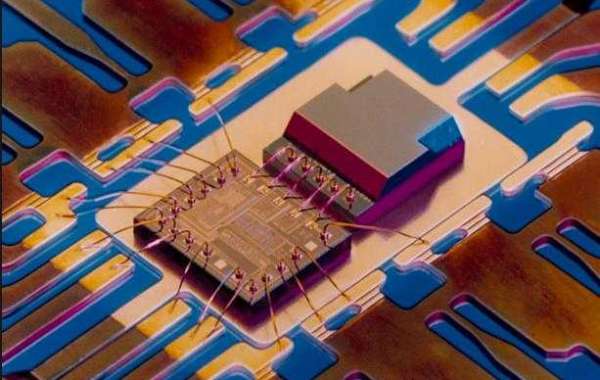
Micro-Electro-Mechanical Systems, commonly known as MEMS, represent one of the most transformative innovations in modern electronics. By integrating mechanical elements, sensors, actuators, and electronics on a microscopic scale, MEMS devices enable machines to sense, process, and respond to their environment. These tiny systems—often invisible to the naked eye—power many of the technologies people rely on every day, from smartphones and wearables to automobiles, medical devices, and industrial automation.
The MEMS market has evolved from niche laboratory research into a global, multi-industry ecosystem. As digitalization accelerates and devices become smarter and more interconnected, MEMS technology is playing an increasingly central role. The convergence of miniaturization, energy efficiency, and real-time sensing is driving sustained growth, making MEMS a cornerstone of next-generation electronic systems.
Click Here to Download a Free Sample Report
Understanding MEMS Technology
MEMS are miniature devices typically fabricated using semiconductor manufacturing techniques such as photolithography, etching, and deposition. They combine mechanical components—such as beams, diaphragms, and springs—with microelectronics on a single chip.
MEMS devices are capable of:
- Sensing physical parameters such as motion, pressure, sound, temperature, and chemical composition
- Converting physical signals into electrical signals for processing
- Actuating mechanical movement in response to electronic control
The defining advantage of MEMS lies in their size, low power consumption, high precision, and ability to be mass-produced at relatively low cost.
Key Drivers of Market Growth
Proliferation of Smart Consumer Electronics
Consumer electronics remain the largest application segment for MEMS devices. Smartphones, tablets, earbuds, smartwatches, and gaming consoles rely heavily on MEMS sensors such as accelerometers, gyroscopes, microphones, and pressure sensors.
As devices become more feature-rich—supporting gesture recognition, augmented reality, spatial audio, and health monitoring—the number of MEMS components per device continues to rise. This trend directly fuels market expansion.
Automotive Electrification and Advanced Driver Assistance
Modern vehicles are rapidly transforming into sensor-rich platforms. MEMS devices play a vital role in automotive safety, performance, and comfort systems. Accelerometers and gyroscopes enable airbag deployment and vehicle stability control, while pressure and flow sensors support engine management and tire monitoring.
The rise of electric vehicles (EVs) and advanced driver-assistance systems (ADAS) is significantly increasing demand for highly reliable and automotive-grade MEMS solutions.
Growth of the Internet of Things (IoT)
The expansion of IoT ecosystems across smart homes, smart cities, agriculture, logistics, and industrial environments has created strong demand for compact, low-power sensing solutions. MEMS sensors are ideal for IoT applications due to their small form factor, cost efficiency, and ability to operate in distributed networks.
IoT growth is also driving innovation in wireless MEMS integration and edge intelligence.
Major MEMS Product Categories
MEMS Sensors
Sensors account for the largest share of the MEMS market. These include motion sensors, environmental sensors, optical sensors, and chemical sensors. Motion sensors such as accelerometers and gyroscopes are widely used in mobile devices, vehicles, and industrial equipment.
Environmental sensors, including pressure, humidity, and gas sensors, are gaining prominence as environmental monitoring and sustainability initiatives expand.
MEMS Actuators
MEMS actuators convert electrical signals into mechanical motion. They are used in applications such as optical switching, inkjet printing, micro-mirrors, and medical devices.
Although smaller in market size compared to sensors, actuators are experiencing steady growth due to their increasing use in precision control systems.
RF MEMS
RF MEMS devices are used in radio frequency applications such as antennas, switches, and filters. These components offer advantages in signal quality, power efficiency, and miniaturization, making them attractive for 5G networks, satellite communication, and defense systems.
As wireless communication standards evolve, RF MEMS are expected to gain wider adoption.
Manufacturing Processes and Materials
MEMS fabrication leverages semiconductor manufacturing infrastructure, enabling high-volume production. Common materials include silicon, glass, polymers, and specialized metals.
Key manufacturing approaches include:
- Bulk micromachining
- Surface micromachining
- Wafer bonding and advanced packaging
Packaging plays a critical role in MEMS performance, as devices must be protected from environmental factors while maintaining sensitivity. Advanced packaging solutions, such as wafer-level packaging, are becoming standard to improve reliability and reduce costs.
Regional Market Landscape
Asia-Pacific
Asia-Pacific is the largest MEMS market, driven by strong consumer electronics manufacturing, automotive production, and semiconductor fabrication capabilities. Countries such as China, Japan, South Korea, and Taiwan dominate MEMS production and consumption.
Government initiatives supporting electronics manufacturing and smart infrastructure further strengthen regional growth.
North America
North America is a hub for MEMS innovation, particularly in automotive, aerospace, medical, and defense applications. The region benefits from a strong ecosystem of technology companies, research institutions, and startup activity.
Investments in autonomous systems and IoT infrastructure continue to support market expansion.
Europe
Europe’s MEMS market is driven by automotive engineering excellence, industrial automation, and healthcare innovation. European manufacturers emphasize high-reliability MEMS solutions that meet stringent safety and quality standards.
Sustainability and energy efficiency priorities are also shaping MEMS adoption in the region.
Role of MEMS in Healthcare and Medical Devices
MEMS technology is transforming healthcare by enabling compact, accurate, and energy-efficient medical devices. Applications include implantable sensors, diagnostic equipment, drug delivery systems, and wearable health monitors.
MEMS pressure sensors and microfluidic devices are widely used in respiratory monitoring, blood pressure measurement, and lab-on-a-chip systems. As healthcare shifts toward remote monitoring and personalized medicine, MEMS adoption is expected to accelerate.
Industry Challenges and Constraints
Despite its strong growth outlook, the MEMS market faces several challenges:
- High initial development and fabrication costs
- Complex design and testing requirements
- Packaging and reliability concerns in harsh environments
- Intense price competition in high-volume segments
Overcoming these challenges requires continuous innovation, standardization, and collaboration across the value chain.
Technological Trends Shaping the Future
Integration with Artificial Intelligence
MEMS sensors are increasingly being paired with AI algorithms to enable intelligent sensing. This combination allows devices to interpret sensor data locally, reducing latency and power consumption.
AI-enabled MEMS are particularly valuable in automotive safety, industrial monitoring, and healthcare diagnostics.
Miniaturization and Multi-Sensor Fusion
Manufacturers are developing multi-axis and multi-function MEMS devices that combine several sensing capabilities on a single chip. This reduces system complexity and improves performance.
Miniaturization continues to be a driving force, enabling MEMS adoption in space-constrained applications such as wearables and implantable devices.
Energy-Efficient and Self-Powered MEMS
Low-power operation is critical for battery-powered and remote applications. Research into energy harvesting MEMS—such as vibration-based or thermal energy systems—is opening new possibilities for self-powered sensors.
Competitive Landscape and Strategic Developments
The MEMS market features a mix of large semiconductor companies, specialized MEMS manufacturers, and emerging startups. Competition is driven by innovation, manufacturing scale, and the ability to meet application-specific requirements.
Strategic trends include:
- Investment in advanced fabrication and packaging technologies
- Partnerships between MEMS designers and system integrators
- Expansion into high-growth applications such as EVs, IoT, and healthcare
Intellectual property protection and process know-how remain critical competitive advantages.
Future Outlook
The MEMS market is poised for sustained growth as sensing and actuation become fundamental to digital transformation across industries. Emerging applications in autonomous systems, smart infrastructure, and biomedical engineering will further expand the market’s scope.
As devices become more intelligent and interconnected, MEMS technology will continue to evolve, delivering higher performance, lower power consumption, and broader functionality.
Conclusion
Micro-Electro-Mechanical Systems have moved from specialized components to essential building blocks of modern technology. Their ability to bridge the physical and digital worlds makes them indispensable in an era defined by connectivity, automation, and data-driven decision-making.
The MEMS market stands at the forefront of innovation, supported by strong demand across consumer electronics, automotive, healthcare, and industrial sectors. Companies that invest in advanced materials, manufacturing excellence, and application-driven design will be best positioned to lead this dynamic and rapidly expanding market.