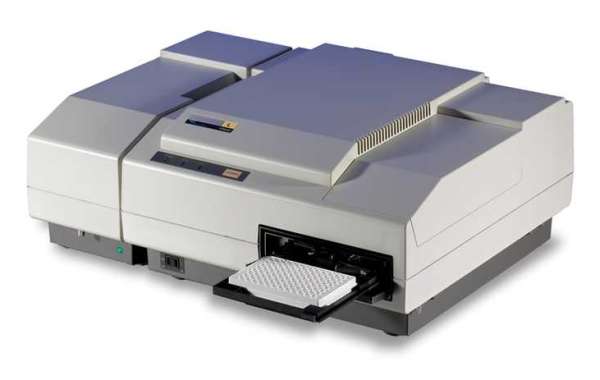
The Microplate Luminometer Market is a technically sophisticated yet rapidly expanding segment of the life sciences instrumentation industry. Luminometers — devices that measure light emitted by chemical, biological, or physical processes — play a central role in laboratories conducting biochemical assays that rely on luminescence. When integrated with microplate formats (typically 96-, 384-, or 1536-well plates), these instruments enable high-throughput light measurement, making them vital tools for research, diagnostics, drug discovery, and quality control.
Unlike absorbance or fluorescence assays that measure light absorption or emitted wavelength shifts, luminescence assays generate light as a direct result of biochemical reactions. This unique feature allows for highly sensitive quantification of ATP, reporter genes, enzyme activity, and cellular responses. The microplate luminometer market has grown substantially with broader adoption of luminescence-based assays across life science sectors.
This article explores market growth drivers, key applications, competitive technologies, regional dynamics, challenges, emerging trends, and future opportunities shaping the microplate luminometer landscape.
Click Here to Download a Free Sample Report
Understanding Microplate Luminometers and Their Role
What Is a Microplate Luminometer?
A microplate luminometer is a laboratory instrument that detects and quantifies light produced by chemical or biological reactions in microplate wells. These devices use sensitive photodetectors — often photomultiplier tubes (PMTs) or photodiodes — optimized for low-level light measurement. The detected luminescent signal is then translated into numerical data, enabling researchers to quantify biological events with high precision.
Key features typically include:
- High sensitivity for detecting low-intensity light
- Compatibility with multiple microplate sizes
- Integration with software for data analysis and reporting
- Options for kinetic measurements and integration time control
- Automation and robotic interface compatibility
The result is a powerful platform for a range of applications that require both high throughput and high sensitivity.
Market Drivers and Growth Factors
Several macroeconomic, scientific, and operational factors are fueling the expansion of the microplate luminometer market:
- Growing Demand for High-Throughput Screening
Drug discovery and biotechnology research increasingly rely on high-throughput screening (HTS) to evaluate large libraries of compounds. Luminescence assays are favored in HTS due to their wide dynamic range, low background noise, and strong signal specificity. Luminometers capable of reading entire microplates within seconds accelerate discovery timelines and enhance productivity, creating sustained demand.
- Rising Adoption of Luminescent Assays
Luminescence-based assays are used to measure cellular viability, gene expression, ATP levels, apoptosis, and receptor activity. Their high sensitivity, wide linear response range, and minimal interference make them preferable to traditional colorimetric or fluorescent assays in many applications. As assay developers innovate new luminescent reagents, demand for compatible detection hardware increases.
- Expansion of Life Sciences and Biotech Research
Global investments in life sciences research — from academic institutions to pharmaceutical giants — continue to grow. Economic focus on next-generation therapies, biologics, and personalized medicine requires advanced analytical technologies. Microplate luminometers fit squarely into this expanded research ecosystem.
- Emergence of Automated and Integrated Workflows
Automation is reshaping laboratories worldwide. Integrated systems that pair luminometers with robotic plate handlers, data management software, and analytics tools improve consistency and throughput. Laboratories seeking scalable, automated solutions drive demand for advanced luminometer systems.
- Diagnostics and Clinical Application Growth
Beyond research, luminescence measurements are increasingly used in clinical diagnostics, including pathogen detection, immune response analysis, and biomarker quantification. Point-of-care and near-patient testing environments benefit from compact luminometers offering rapid, reliable results.
- Technological Advancements
Improvements in detector technology, signal processing, software interfaces, and multiplexing capability boost instrument performance while widening potential applications. The market benefits from both incremental enhancements and disruptive innovations in instrument design.
Core Market Segmentation
The microplate luminometer market can be segmented across several dimensions:
- By Product Type
- Standalone Luminometers: Dedicated devices optimized exclusively for luminescent assays.
- Multimode Plate Readers: Instruments capable of luminescence, fluorescence, absorbance, and other detection modes in a single platform.
- Portable/Handheld Luminometers: Compact units for field, clinical, or point-of-care use.
Multimode readers command significant market share due to their versatility, while standalone systems continue to attract labs prioritizing sensitivity and specificity.
- By Technology
- Photomultiplier Tube (PMT)-Based Detection: High sensitivity and precision for low-light applications.
- Photodiode Detection: Cost-effective and durable, suitable for assays with higher signal intensity.
- CCD/CMOS Sensor-Based Systems: Imaging-oriented platforms for advanced data capture.
Each technology offers trade-offs in cost, sensitivity, and speed — influencing buyer decisions based on application needs.
- By End User
- Pharmaceutical & Biotechnology Companies
- Academic & Research Institutions
- Clinical and Diagnostic Laboratories
- Contract Research Organizations (CROs)
- Industrial & Quality Control Laboratories
Pharmaceutical and biotech entities are primary purchasers due to extensive drug discovery workflows, but academic and clinical sectors also contribute strongly to market demand.
- By Region
- North America
- Europe
- Asia-Pacific
- Latin America
- Middle East & Africa
Geographic differences in research funding, healthcare infrastructure, and industrial biotechnology adoption significantly influence growth patterns.
Applications Powering Market Demand
- Drug Discovery and Development
In preclinical and early development stages, researchers use luminescence assays to assess compound potency, target engagement, cytotoxicity, and mechanism of action. High-throughput luminometers accelerate these workflows by enabling thousands of microplate assays per day.
- Cell Biology and Functional Genomics
Luminescence is frequently used to measure ATP (as a proxy for cell viability), reporter gene expression, and other functional readouts. Its sensitivity makes it ideal for low-input samples and dynamic studies of gene regulation.
- Immunology and Cell Signaling
Luminescent assays help quantify cytokines, receptor activation, and signal transduction events. In immunotherapy research, these measurements guide candidate selection and support mechanistic understanding.
- Diagnostics and Clinical Testing
Clinical applications include viral detection assays, biomarker quantification, and point-of-care testing. Luminometers used in these contexts must balance sensitivity with ease of use, reliable performance, and rapid turnaround.
- Environmental and Industrial Testing
Beyond healthcare, luminescence detection is applied in food safety (e.g., bacterial ATP testing), water quality analysis, and industrial process monitoring. These markets extend the reach of microplate luminometry outside traditional life sciences.
Regional Insights and Market Drivers
North America
North America leads the global microplate luminometer market due to robust biotechnology and pharmaceutical sectors, high research and development investment, and early adoption of advanced laboratory technologies. The U.S. accounts for a large share, driven by strong academic research infrastructure and commercial life sciences investment.
Europe
Europe sustains steady growth through well-established research institutions and public health investment. Countries such as Germany, the U.K., and France demonstrate strong demand for precision laboratory instruments, supported by funding for infectious disease research, cancer biology, and personalized medicine.
Asia-Pacific
The Asia-Pacific region is the fastest-growing market. China, Japan, India, and South Korea are expanding research funding, biotechnology manufacturing capacity, and clinical testing infrastructure. Emerging economies are increasing adoption of luminometer systems as part of broader laboratory modernization efforts.
Latin America
Latin American demand is more modest but growing. Investments in diagnostics, public health surveillance (e.g., infectious disease testing), and academic research are key catalysts. Partnerships with global instrument suppliers help accelerate technology transfer.
Middle East & Africa
Growth is nascent but promising. Healthcare infrastructure development, increased focus on medical research, and government support for biotechnological innovation contribute to future market potential.
Competitive Landscape
The microplate luminometer market includes established instrument manufacturers, specialized niche players, and integrated lab solution providers. Competitive dynamics emphasize technological performance, software capabilities, customer support, and price positioning.
Key strategies observed among leading companies include:
- New Product Development: Introducing instruments with enhanced sensitivity, automation capability, and user-friendly interfaces.
- Software Innovation: Developing intuitive analysis platforms that facilitate data visualization, automation integration, and remote operation.
- Partnerships and Collaborations: Aligning with reagent manufacturers, software developers, and laboratories to drive solution adoption.
- Geographic Expansion: Extending distribution networks in emerging regions through local partnerships and service centers.
Manufacturers often differentiate on measurement sensitivity, assay compatibility, automation readiness, and total cost of ownership.
Technological Trends Impacting the Market
- Enhanced Detector Technologies
Newer photodetectors and sensor arrays improve sensitivity and dynamic range, enabling detection of ultra-low light signals and expanding assay possibilities.
- Integration with Laboratory Automation
Luminometers increasingly interface with robotic plate handlers, liquid handlers, and workflow software — enabling unattended operation and higher throughput.
- Cloud-Based Data Management and Analytics
Cloud connectivity allows laboratories to centralize data, apply advanced analytics, and collaborate across locations. This is particularly impactful for multi-site research organizations.
- Multiplex Assay Capability
Advanced luminometers can simultaneously support multiple assay formats or output types, increasing flexibility and reducing instrument footprint.
- Miniaturization and Portability
Compact and portable luminometer designs are expanding use cases into clinical point-of-care settings and field applications where traditional benchtop systems are impractical.
Challenges Constraining Growth
While the microplate luminometer market is growing, several challenges temper its pace:
- High Initial Investment
High-performance luminometer systems — particularly those integrated into automation workflows — require significant upfront capital, which can deter smaller laboratories or those with constrained budgets.
- Technical Complexity and Training Needs
Advanced systems with configurable software and automation require user training and technical expertise. This increases onboarding time and may slow adoption in less established research environments.
- Assay Standardization
Different assay chemistries and reagent formulations can produce variable results across platforms. This necessitates rigorous validation and standardization efforts.
- Competition with Other Detection Modes
Fluorescence and absorbance technologies continue to evolve and are often entrenched as default detection methods. Convincing laboratories to transition or expand into luminescence-based methods requires evidence of performance advantage.
Future Outlook and Opportunities
Expansion into Clinical Markets
As rapid, sensitive luminescence assays become validated for routine diagnostics — including infectious disease panels and immune profiling — microplate luminometers are expected to gain traction in clinical laboratories.
Point-of-Care and Decentralized Testing
Portable luminometer designs will support decentralized testing workflows, especially where quick results are critical, such as in epidemic response, remote clinics, and food safety inspection.
AI-Enabled Data Insights
Integration of artificial intelligence and machine learning into data analysis software will enhance interpretation of luminescence results, trend detection, and predictive assay performance.
Customization and Modular Platforms
Modular luminometers with adaptable components and plug-and-play upgrades will empower laboratories to scale capabilities as research needs change.
Emerging Application Frontiers
New luminescent assay applications — including single-cell analysis, high-content screening, and advanced immunoassays — will further drive demand for cutting-edge detection instruments.
Conclusion
The Microplate Luminometer Market is a specialized yet high-growth segment of life sciences instrumentation, driven by adoption of luminescent assays, rising research activity, and technological innovation. As laboratories seek greater sensitivity, throughput, and integration with automated workflows, luminometers are becoming essential tools across drug discovery, cell biology, diagnostics, and industrial testing.
Regional growth trends underscore expanding global access, while competitive dynamics emphasize performance differentiation, software capability, and customer support. Although challenges related to cost, technical complexity, and assay standardization persist, the market outlook remains robust.
The future promises continued innovation — from portable luminometers in clinical settings to AI-enhanced data analytics and hybrid detection platforms. For manufacturers, researchers, and healthcare practitioners alike, the microplate luminometer market represents a vibrant intersection of technology and scientific advancement.