
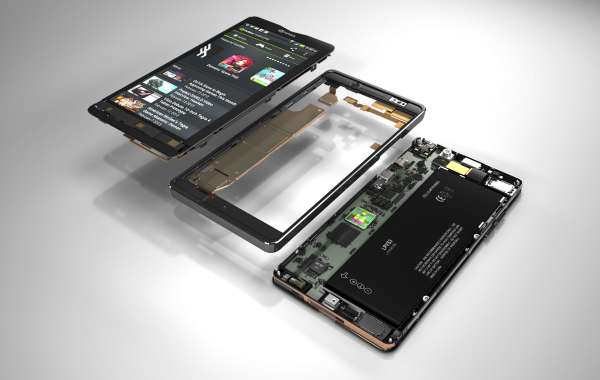
The Mobile System-on-Chip (SoC) Market forms the technological backbone of modern smart devices, integrating multiple processing components into a single compact silicon platform. A mobile SoC typically combines a central processing unit (CPU), graphics processing unit (GPU), digital signal processor (DSP), artificial intelligence (AI) accelerator, modem, memory controllers, and various connectivity modules. This high level of integration enables smartphones, tablets, wearables, and other portable electronics to deliver advanced performance while maintaining energy efficiency.
As mobile devices evolve from communication tools into powerful computing platforms, the role of mobile SoCs has expanded dramatically. Today’s SoCs support complex workloads such as real-time gaming, high-resolution video streaming, computational photography, machine learning inference, and on-device AI processing. This transformation has positioned the mobile SoC market at the center of innovation in consumer electronics and beyond.
This article explores the mobile SoC market in depth, analyzing growth drivers, architecture trends, segmentation, regional dynamics, competitive strategies, challenges, and future opportunities shaping this fast-moving industry.
Click Here to Download a Free Sample Report
Understanding Mobile SoCs and Their Core Architecture
What Is a Mobile SoC?
A mobile SoC is an integrated semiconductor chip designed to power portable and battery-operated devices. Unlike traditional computing systems that rely on multiple discrete chips, a mobile SoC consolidates essential components onto a single silicon die. This design reduces power consumption, improves performance per watt, and minimizes physical space requirements.
Core components of a typical mobile SoC include:
- CPU Cores: Handle general computing tasks and application processing
- GPU: Manages graphics rendering and parallel workloads
- AI/Neural Processing Units (NPUs): Accelerate machine learning tasks
- Modem: Enables cellular connectivity (4G, 5G, and beyond)
- Image Signal Processor (ISP): Supports camera and image processing
- Memory Controllers: Manage interaction with RAM and storage
- Connectivity Modules: Wi-Fi, Bluetooth, GPS, and other interfaces
This tightly integrated architecture allows mobile devices to deliver desktop-like capabilities within strict thermal and power constraints.
Key Market Drivers Fueling Growth
- Expanding Smartphone and Tablet Ecosystem
Smartphones remain the largest application segment for mobile SoCs. Although unit growth has stabilized in some mature markets, device complexity and performance expectations continue to rise. Consumers demand faster processing, better graphics, enhanced camera performance, and longer battery life — all of which depend on advanced SoC designs.
Tablets, foldable devices, and hybrid form factors further contribute to demand for high-performance mobile SoCs optimized for multitasking and multimedia consumption.
- Rapid Adoption of 5G Technology
The global rollout of 5G networks has significantly influenced the mobile SoC market. Modern SoCs must integrate advanced modems capable of supporting higher data speeds, lower latency, and improved energy efficiency. This shift has increased design complexity while creating opportunities for differentiation among SoC vendors.
5G-enabled SoCs are now a standard requirement across mid-range and premium devices, accelerating replacement cycles and driving innovation.
- Rise of On-Device Artificial Intelligence
AI has become a defining feature of modern mobile experiences. Tasks such as facial recognition, voice assistants, real-time language translation, photography enhancement, and predictive performance optimization increasingly rely on on-device AI processing.
Mobile SoCs now include dedicated AI accelerators to handle these workloads efficiently without relying on cloud connectivity. This trend is driving architectural innovation and creating a competitive edge for SoC platforms with superior AI performance per watt.
- Growth of Mobile Gaming and Graphics-Intensive Applications
Mobile gaming has evolved into a major entertainment industry, with graphically rich games rivaling console-level experiences. High-refresh-rate displays, advanced shaders, and real-time physics simulations place significant demands on GPUs within mobile SoCs.
The need for sustained performance without overheating has driven advancements in GPU architecture, thermal management, and power efficiency within SoCs.
- Increasing Use of Mobile SoCs Beyond Smartphones
Mobile SoCs are no longer limited to phones and tablets. They are increasingly used in:
- Wearable devices
- Augmented and virtual reality headsets
- Smart home hubs
- Automotive infotainment systems
- Industrial handheld terminals
- Medical and healthcare devices
This diversification broadens the addressable market and creates demand for application-specific SoC variants.
Market Segmentation Analysis
By Device Type
- Smartphones
- Tablets
- Wearables
- Laptops and Hybrid Devices
- AR/VR Devices
- Embedded and IoT Systems
Smartphones dominate overall volume, but emerging segments such as AR/VR and smart wearables are expected to experience faster growth rates.
By Processing Capability
- Entry-Level SoCs: Optimized for affordability and basic functionality
- Mid-Range SoCs: Balance performance and efficiency for mainstream users
- High-End/Premium SoCs: Designed for flagship devices and advanced workloads
Premium SoCs command higher margins and showcase the latest technological innovations, often setting benchmarks for the entire market.
By Core Architecture
- ARM-Based SoCs
- Custom CPU Architectures
- Hybrid Designs
ARM-based architectures dominate the mobile SoC market due to their power efficiency and scalable design. However, customization and proprietary enhancements play a growing role in differentiation.
By Connectivity
- 4G/LTE SoCs
- 5G SoCs
- Multi-Mode Connectivity SoCs
5G-capable SoCs now account for a growing share of new product launches, particularly in mid- to high-tier devices.
Technological Trends Shaping the Market
- Advanced Semiconductor Process Nodes
Shrinking fabrication nodes (such as sub-5 nm technologies) allow more transistors to be packed into smaller areas, improving performance and reducing power consumption. These advancements enable complex SoC designs with higher clock speeds and enhanced AI capabilities.
- Heterogeneous Computing Architectures
Modern mobile SoCs rely on heterogeneous computing, where different processing units handle specialized tasks. CPUs, GPUs, NPUs, and DSPs work together to optimize performance and efficiency depending on workload requirements.
- Improved Power Management and Thermal Control
Energy efficiency is critical in mobile devices. SoC vendors are investing heavily in dynamic voltage scaling, intelligent workload scheduling, and advanced power gating techniques to extend battery life while maintaining performance.
- Integration of Imaging and Multimedia Capabilities
Advanced image signal processors support multi-camera setups, computational photography, and real-time video processing. These features are now key differentiators in smartphone marketing and directly influence SoC design priorities.
- Security and Privacy Enhancements
Mobile SoCs increasingly integrate hardware-level security features such as secure enclaves, encryption engines, and biometric authentication support. These capabilities are essential for protecting user data and enabling secure mobile payments and enterprise applications.
Regional Market Dynamics
Asia-Pacific
Asia-Pacific dominates the mobile SoC market due to its large consumer electronics manufacturing base and high smartphone penetration. Countries such as China, South Korea, Taiwan, and India play critical roles in both design and production. Rapid adoption of 5G and affordable smartphones further drives regional demand.
North America
North America is a hub for mobile SoC innovation and design leadership. Strong demand for premium smartphones, high-end tablets, and emerging AR/VR devices supports continued growth. The region also leads in AI-driven SoC development.
Europe
Europe contributes significantly through strong consumer demand, automotive integration, and industrial applications. Regulatory focus on data security and energy efficiency influences SoC feature requirements in this region.
Latin America
Latin America represents a growing market driven by expanding smartphone adoption and improved mobile connectivity. Mid-range and entry-level SoCs dominate due to price sensitivity.
Middle East & Africa
This region is an emerging market with increasing demand for affordable smart devices and digital infrastructure. Gradual 5G rollout and rising mobile usage are expected to support future growth.
Competitive Landscape
The mobile SoC market is highly competitive and innovation-driven. Vendors compete on performance benchmarks, power efficiency, AI capability, modem integration, and cost optimization.
Key competitive strategies include:
- Rapid product iteration and frequent launches
- Close collaboration with smartphone OEMs
- Customization for specific device categories
- Vertical integration of hardware and software
- Investment in proprietary AI and graphics technologies
Brand perception and ecosystem compatibility play a major role in influencing OEM adoption decisions.
Challenges Facing the Mobile SoC Market
- Rising Development and Manufacturing Costs
Advanced fabrication processes and complex SoC designs require significant investment, increasing development risk and limiting participation to well-capitalized players.
- Supply Chain Volatility
Dependence on global semiconductor manufacturing and geopolitical factors can disrupt supply chains, impacting production timelines and pricing.
- Thermal and Power Constraints
As performance expectations rise, managing heat dissipation and battery efficiency remains a constant engineering challenge.
- Increasing Competition and Market Saturation
With multiple vendors targeting similar performance tiers, differentiation becomes more difficult, especially in the mid-range segment.
Future Outlook and Opportunities
Expansion of AI-First SoCs
Future mobile SoCs will increasingly prioritize AI acceleration, enabling advanced on-device intelligence without cloud dependency.
Growth of Foldable and Next-Generation Devices
New device form factors will require SoCs optimized for multitasking, display management, and adaptive performance.
Convergence with Automotive and IoT Markets
Mobile SoC architectures will influence automotive infotainment, digital cockpits, and connected IoT platforms, expanding market reach.
Sustainability and Energy Efficiency
Energy-efficient SoC designs will play a critical role in reducing environmental impact and extending device lifecycles.
Conclusion
The Mobile SoC Market is a dynamic and innovation-intensive industry at the heart of modern digital experiences. As mobile devices continue to evolve into intelligent, connected computing platforms, the importance of advanced SoC design will only grow.
Driven by 5G adoption, AI integration, mobile gaming, and expanding application areas, the market offers significant growth opportunities. Despite challenges related to cost, competition, and technical complexity, continuous innovation and diversification are expected to sustain long-term momentum.
Mobile SoCs will remain a cornerstone technology enabling the next wave of smart devices, shaping how users interact with digital content, services, and intelligent systems worldwide.