
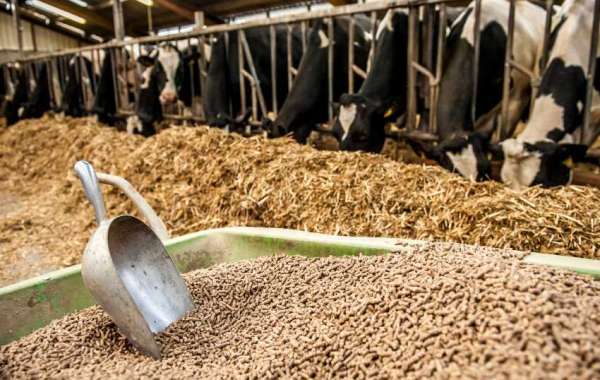
The global livestock and poultry industry is under growing pressure to improve productivity while reducing environmental impact and production costs. Rising demand for animal protein, tightening regulations on antibiotic use, and increasing feed prices are reshaping how animal nutrition is approached. Within this evolving landscape, the feed enzyme market has emerged as a critical component of modern animal feed formulations.
Feed enzymes are biological catalysts added to animal feed to enhance nutrient digestibility and absorption. By breaking down complex feed components that animals cannot efficiently digest on their own, enzymes improve feed utilization, animal performance, and overall production efficiency. As livestock producers seek sustainable and cost-effective solutions, feed enzymes are becoming an indispensable tool across poultry, swine, ruminant, and aquaculture sectors.
Click Here to Download a Free Sample Report
Understanding Feed Enzymes and Their Role in Nutrition
Feed enzymes are typically derived from microbial sources such as bacteria and fungi. They work by catalyzing specific biochemical reactions in the digestive system of animals, enabling better breakdown of nutrients such as carbohydrates, proteins, and fats. This improves the availability of energy and essential nutrients while reducing waste excretion.
In conventional feed ingredients like corn, wheat, soybean meal, and barley, a significant portion of nutrients is locked within complex structures. Animals, especially monogastric species like poultry and pigs, lack the natural enzymes required to fully digest these components. Supplementing feed with enzymes bridges this nutritional gap and enhances feed efficiency.
Key Drivers of the Feed Enzyme Market
Rising Demand for Animal Protein
Global consumption of meat, dairy, eggs, and seafood continues to increase due to population growth, urbanization, and rising incomes. To meet this demand, livestock producers must maximize output without proportionally increasing feed input. Feed enzymes enable producers to extract more nutritional value from the same feed ingredients, supporting higher productivity and profitability.
Escalating Feed Costs
Feed accounts for a significant portion of total livestock production costs. Volatile prices of grains and protein sources have intensified the need for feed optimization strategies. Enzymes allow the use of lower-cost or alternative feed ingredients while maintaining performance, making them an economically attractive solution for producers.
Restrictions on Antibiotic Growth Promoters
Regulatory bans and consumer concerns regarding antibiotic use in animal agriculture have accelerated the adoption of alternative feed additives. Feed enzymes support gut health and nutrient absorption, indirectly improving animal performance without reliance on antibiotics. This shift has significantly boosted enzyme demand, particularly in poultry and swine production.
Types of Feed Enzymes and Their Applications
Carbohydrases
Carbohydrases represent the largest segment of the feed enzyme market. These enzymes break down complex carbohydrates such as non-starch polysaccharides that hinder nutrient absorption. Examples include xylanase, beta-glucanase, and cellulase. By reducing intestinal viscosity and improving energy availability, carbohydrases enhance growth rates and feed conversion ratios.
Proteases
Proteases aid in the digestion of proteins by breaking them into absorbable amino acids. These enzymes improve protein utilization and reduce nitrogen excretion, contributing to better growth performance and environmental sustainability. Proteases are increasingly used to optimize protein levels in feed formulations.
Phytases
Phytases are widely used to break down phytate, an anti-nutritional factor that binds phosphorus in plant-based feeds. By releasing bound phosphorus, phytases reduce the need for inorganic phosphorus supplementation and lower phosphorus excretion into the environment. This not only reduces feed costs but also supports compliance with environmental regulations.
Lipases and Other Enzymes
Lipases improve fat digestion and energy utilization, particularly in young animals with underdeveloped digestive systems. Other specialty enzymes are used for targeted applications, contributing to customized feed solutions.
Livestock-Specific Demand Trends
Poultry
Poultry represents the largest consumer segment in the feed enzyme market. Rapid growth cycles, high feed efficiency requirements, and sensitivity to feed quality make poultry production highly responsive to enzyme supplementation. Enzymes improve nutrient digestibility, bird health, and uniformity, making them standard components in modern poultry diets.
Swine
In swine production, feed enzymes enhance digestion during all growth stages, particularly in weaned piglets. Improved nutrient absorption supports better weight gain and gut health, reducing stress and mortality rates.
Ruminants
While ruminants naturally possess microbial fermentation systems, enzymes are increasingly used to improve fiber digestion and feed efficiency. Enzyme supplementation supports higher milk yields, better weight gain, and optimized rumen function.
Aquaculture
The aquaculture sector is emerging as a high-growth area for feed enzymes. As fishmeal becomes more expensive and scarce, enzymes enable the use of plant-based feed ingredients without compromising growth performance. This supports sustainable expansion of global aquaculture production.
Technological Innovations in Feed Enzyme Development
Advancements in biotechnology are transforming the feed enzyme market. Modern enzyme production leverages genetic engineering, fermentation optimization, and strain selection to enhance enzyme activity, stability, and specificity. These innovations result in enzymes that perform effectively under varying feed processing conditions and digestive environments.
Encapsulation technologies further protect enzymes during feed pelleting and storage, ensuring consistent performance. Additionally, precision nutrition approaches are enabling the development of tailored enzyme blends for specific animal species, life stages, and feed compositions.
Regional Market Insights
Asia-Pacific: Leading Consumption and Growth
Asia-Pacific dominates the feed enzyme market due to its large livestock population and rapidly growing poultry and aquaculture industries. Rising meat consumption, increasing awareness of feed efficiency, and supportive government initiatives are driving market expansion in countries such as China, India, and Southeast Asian nations.
North America: Technological Maturity
North America is characterized by high adoption of advanced feed technologies and strong emphasis on productivity and sustainability. Feed enzymes are widely used across livestock sectors, supported by well-established feed manufacturing infrastructure and research capabilities.
Europe: Sustainability and Regulation-Driven Demand
Europe’s feed enzyme market is strongly influenced by strict environmental regulations and early bans on antibiotic growth promoters. Enzymes play a crucial role in improving nutrient utilization and reducing environmental emissions, aligning with the region’s sustainability goals.
Environmental and Economic Benefits
Feed enzymes contribute significantly to environmental sustainability by reducing nutrient excretion, greenhouse gas emissions, and reliance on finite resources. Improved feed efficiency means less feed is required per unit of animal product, lowering the overall environmental footprint of livestock production.
Economically, enzymes help producers maintain profitability despite rising input costs. Improved growth performance, better feed conversion, and reduced waste translate into tangible financial benefits across the supply chain.
Challenges Facing the Feed Enzyme Market
Despite strong growth prospects, the feed enzyme market faces certain challenges. Enzyme efficacy can vary depending on feed composition, animal species, and farming practices, requiring careful formulation and technical expertise. Price sensitivity among small-scale farmers may also limit adoption in some regions.
Regulatory approval processes for new enzyme products can be time-consuming, particularly in markets with stringent feed additive regulations. However, ongoing research and education efforts are helping to address these barriers.
Competitive Landscape and Market Dynamics
The feed enzyme market is moderately consolidated, with established players and emerging biotechnology firms competing on innovation, performance, and technical support. Companies invest heavily in research and development to create differentiated products tailored to specific nutritional challenges.
Strategic collaborations between enzyme producers, feed manufacturers, and livestock producers are becoming increasingly common. These partnerships help accelerate product adoption and optimize feed formulations at the farm level.
Future Outlook of the Feed Enzyme Market
The future of the feed enzyme market is closely tied to the evolution of sustainable animal agriculture. Growing emphasis on precision feeding, reduced antibiotic use, and environmental stewardship will continue to drive enzyme adoption. Emerging markets, particularly in Asia, Africa, and Latin America, offer significant growth potential as livestock production intensifies.
Innovation in enzyme engineering, digital feed optimization tools, and integrated nutrition solutions will further enhance market value. As the industry moves toward more efficient and responsible production systems, feed enzymes are expected to remain a cornerstone of modern animal nutrition.
Conclusion
The feed enzyme market plays a vital role in improving animal nutrition, enhancing production efficiency, and supporting sustainable livestock farming. By unlocking the full nutritional potential of feed ingredients, enzymes help producers meet rising global protein demand while minimizing environmental impact and operational costs.
As technological advancements continue and awareness of sustainable feed practices grows, feed enzymes will remain essential to the future of animal agriculture. Their ability to deliver economic, nutritional, and environmental benefits positions the feed enzyme market for sustained growth in the years ahead.