
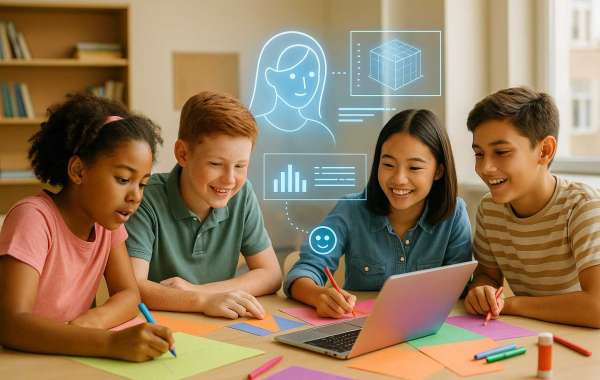
“Personalized learning” was once a buzzword that educators desperately wanted to believe in. It promised equity, engagement, and better outcomes for every student. In theory, it sounded transformational. In real classrooms, however, it often turned into something very different—endless spreadsheets, confusing dashboards, and overwhelmed teachers trying to manage systems that worked against them rather than with them.
The vision was right. The tools were not.Today, that has changed. With the rise of AI in education, personalized learning is finally becoming practical, effective, and sustainable—without adding chaos to teachers’ workloads.
.png)
Why Personalized Learning Failed Before:
Earlier attempts at personalized learning focused heavily on data collection but very little on actual understanding. These systems tracked task completion, clicks, and time spent—but they couldn’t interpret why a student was struggling or excelling.
A widely cited pilot program from the mid-2010s illustrates this clearly. Teachers were expected to manage individual digital learning profiles for every student. On paper, the system looked innovative. In practice, it required hours of manual input, guesswork, and reconciliation between reports that didn’t align. Students quickly lost interest, and teachers burned out.
Those systems personalized data, not learning. Without real adaptability, the promise of personalization collapsed under its own complexity.
This is exactly where Artificial Intelligence education marks a turning point.
What’s Different Now with AI for Teachers:
Modern AI systems don’t just store information—they interpret behavior. AI for teachers can analyze how students interact with content in real time, noticing patterns like hesitation, repeated errors, or sudden progress.
When a student struggles, AI can:
- Rephrase explanations
- Provide additional examples
- Shift from text to visuals or practice-based learning
When a student excels, it automatically increases challenge levels, keeping engagement high.
A math teacher in Singapore shared how an adaptive AI platform adjusts problem difficulty instantly as students work. “It feels like having thirty individual tutors in the room,” she said. “I still lead the class, but the AI fills learning gaps faster than I ever could.”
That’s not automation replacing teaching—it’s technology amplifying it.

Lesson Planning with AI Makes Personalization Possible:
One of the biggest barriers to personalization has always been time. Creating multiple versions of the same lesson manually is simply not realistic. This is where Lesson Planning with AI becomes a game changer.
Teachers can now:
- Generate differentiated content in minutes
- Adapt lessons for mixed-ability classrooms
- Align activities with learning standards quickly
In Canada, a reading teacher uses AI to rewrite the same article at multiple reading levels. Her entire class studies the same topic—climate change—but each student reads it at a level they can understand. The result is shared discussion without exclusion. “My ELL students finally feel like they belong in the same conversation,” she explained.
This kind of personalization was almost impossible before AI tools for teachers became accessible.
The Human Side of AI-Driven Personalization:
One of the most surprising outcomes of AI-powered personalization is that it doesn’t isolate students—it brings them together.
When every learner can access the same topic at the right level, classroom discussions become richer and more inclusive. Students participate with confidence, not fear of being left behind.
A history teacher in South Africa uses AI to generate customized timelines based on student interests. Some students explore women’s roles during apartheid, while others compare global resistance movements. When they come together, each student contributes unique insights. “They meet in the middle as equals,” she said.
This is where AI in high schools is having a particularly strong impact—supporting individuality while strengthening collective learning.
.png)
How AI in High Schools Is Changing Learning Outcomes:
Secondary education demands flexibility. Teachers manage multiple classes, diverse learning needs, and high academic pressure. AI in high schools helps by making personalization scalable rather than overwhelming.
High school teachers use AI to:
- Scaffold complex concepts
- Support exam preparation
- Identify learning gaps early
- Encourage deeper inquiry
Instead of reacting to failure, teachers can intervene earlier, using AI insights to guide instruction thoughtfully.

Where Teachers Should Start:
Personalization doesn’t require a full system overhaul. The smartest approach is to start small.
Choose one subject or skill where students struggle to stay engaged. Use an adaptive AI tool and observe patterns—not just scores. Notice who slows down, who skips questions, and who avoids certain formats.
Use that insight to make small instructional adjustments. Personalization works best when guided by teacher judgment, not blind automation.
This balance is exactly why AI in education is finally delivering on its promise.
To explore practical tools and real classroom strategies inspired by AI-driven teaching, you can also check out this recommended resource available on Amazon: https://www.amazon.com/dp/B0FTFH9DGQ
.png)
Final Thought:
AI has not changed the goal of education—it has changed what’s possible.
Teachers have always wanted to reach every student as an individual. Now, they finally have the capacity to do so without sacrificing time, energy, or classroom community.
The future of learning isn’t one-size-fits-all.
It’s all sizes learning—together.
For deeper insights, real case studies, and practical guidance on AI tools for teachers.
Explore more at: https://jameswilton.com/
Email id: info@jameswilton.com