
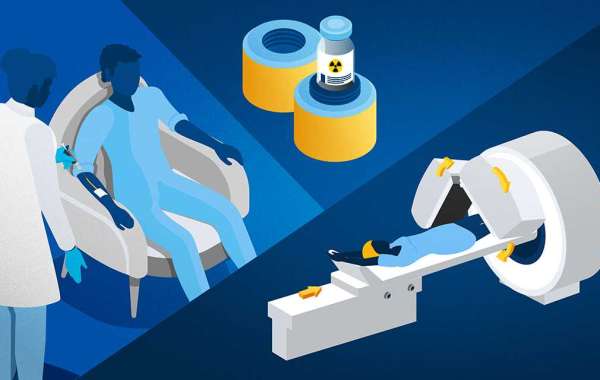
The Radiopharmaceuticals Market is emerging as a critical segment of modern healthcare, playing a vital role in the diagnosis and treatment of complex diseases such as cancer, cardiovascular disorders, and neurological conditions. Radiopharmaceuticals are specialized drugs that contain radioactive isotopes and are used primarily in nuclear medicine for imaging and therapeutic purposes. These agents allow clinicians to visualize physiological processes at the molecular level, enabling early disease detection and precise treatment planning.
With the global rise in chronic diseases, increasing demand for personalized medicine, and continuous advancements in nuclear imaging technologies, the radiopharmaceuticals market is experiencing steady growth. Innovations in radioisotope production, targeted radiotherapy, and diagnostic imaging are transforming the way diseases are diagnosed and managed.
This article provides a comprehensive overview of the radiopharmaceuticals market, covering its evolution, key drivers, segmentation, technological trends, regional insights, challenges, and future outlook.
Understanding Radiopharmaceuticals
Radiopharmaceuticals are medicinal formulations that include radioactive compounds used for diagnostic or therapeutic applications. Once administered, these agents accumulate in specific organs, tissues, or cells, emitting radiation that can be detected by imaging equipment or used to destroy diseased cells.
Radiopharmaceuticals are primarily categorized into:
- Diagnostic radiopharmaceuticals, used in imaging procedures such as positron emission tomography (PET) and single-photon emission computed tomography (SPECT).
- Therapeutic radiopharmaceuticals, used to deliver targeted radiation to treat diseases, especially various forms of cancer.
Unlike conventional drugs, radiopharmaceuticals are typically administered in trace amounts and have short half-lives, requiring precise handling and timely usage.
Evolution of the Radiopharmaceuticals Market
The radiopharmaceuticals market has evolved significantly since its early use in basic nuclear imaging. Initially focused on simple diagnostic tracers, the industry has progressed toward highly targeted agents capable of detecting disease at a cellular level and delivering personalized therapies.
Advances in radiochemistry, molecular biology, and imaging technologies have expanded the applications of radiopharmaceuticals beyond traditional oncology into cardiology, neurology, endocrinology, and infectious disease diagnosis. This evolution reflects the broader shift toward precision medicine and minimally invasive diagnostics.
Key Market Drivers
Rising Prevalence of Cancer and Chronic Diseases
Cancer remains one of the leading causes of mortality worldwide, driving strong demand for advanced diagnostic and therapeutic solutions. Radiopharmaceuticals enable early tumor detection, accurate staging, and targeted treatment, making them indispensable in oncology care. Additionally, cardiovascular and neurological disorders further contribute to market growth.
Growing Demand for Early and Accurate Diagnosis
Early diagnosis significantly improves treatment outcomes. Radiopharmaceuticals provide functional imaging that reveals metabolic and physiological changes before structural abnormalities appear, enabling timely medical intervention.
Advancements in Nuclear Imaging Technologies
Technological improvements in PET, SPECT, and hybrid imaging systems such as PET/CT and PET/MRI are increasing the accuracy and efficiency of radiopharmaceutical-based diagnostics. These advancements enhance image resolution and expand clinical applications.
Shift Toward Personalized and Targeted Therapies
The healthcare industry is increasingly focused on personalized medicine. Therapeutic radiopharmaceuticals deliver targeted radiation to diseased cells while minimizing damage to healthy tissues, aligning with the growing demand for precision treatments.
Market Segmentation
By Product Type
Diagnostic Radiopharmaceuticals:
This segment dominates the market due to widespread use in imaging procedures. Common diagnostic isotopes include technetium-99m, fluorine-18, and iodine-123, used across various clinical applications.
Therapeutic Radiopharmaceuticals:
This segment is growing rapidly as targeted radiotherapies gain acceptance. These products are used in treating cancers such as thyroid cancer, prostate cancer, and neuroendocrine tumors.
By Radioisotope
- Technetium-99m
- Fluorine-18
- Iodine isotopes
- Gallium-68
- Lutetium-177
- Yttrium-90
Each isotope is selected based on its physical properties, half-life, and suitability for specific diagnostic or therapeutic uses.
By Application
Oncology:
Oncology is the largest application segment, driven by increasing cancer incidence and the effectiveness of radiopharmaceuticals in tumor imaging and targeted therapy.
Cardiology:
Radiopharmaceuticals are widely used in myocardial perfusion imaging to assess blood flow and detect heart disease.
Neurology:
Neurological applications include imaging for Alzheimer’s disease, Parkinson’s disease, and epilepsy, supporting early diagnosis and disease monitoring.
Other Applications:
These include endocrinology, pulmonology, and infectious disease diagnosis.
By End User
- Hospitals
- Diagnostic imaging centers
- Specialty clinics
- Research and academic institutions
Hospitals and diagnostic centers account for the largest market share due to high patient volumes and advanced imaging infrastructure.
Technological Advancements Shaping the Market
Development of Novel Radiotracers
Ongoing research is focused on developing new radiotracers with higher specificity and improved safety profiles. These tracers enhance diagnostic accuracy and expand therapeutic possibilities.
Theranostics: Combining Diagnosis and Therapy
Theranostics is an emerging approach that uses the same molecular target for both diagnosis and treatment. This strategy allows clinicians to identify patients who are most likely to benefit from targeted radiopharmaceutical therapy.
Advances in Radioisotope Production
Innovations in cyclotron and reactor technologies are improving the availability and reliability of radioisotope supply. Decentralized production models are also being explored to address logistical challenges.
Integration with Artificial Intelligence
AI-powered image analysis is enhancing the interpretation of nuclear imaging results. These tools improve diagnostic accuracy, reduce interpretation time, and support clinical decision-making.
Regional Market Insights
North America
North America leads the radiopharmaceuticals market due to advanced healthcare infrastructure, high adoption of nuclear medicine, and strong investment in research and development. The presence of leading manufacturers and supportive regulatory frameworks further strengthen market growth.
Europe
Europe represents a significant market, driven by increasing cancer prevalence, technological innovation, and government support for advanced diagnostic imaging. Countries in Western Europe are at the forefront of theranostic adoption.
Asia-Pacific
The Asia-Pacific region is expected to witness the fastest growth, supported by expanding healthcare infrastructure, rising awareness of early disease diagnosis, and growing investments in nuclear medicine facilities. Increasing cancer incidence and medical tourism also contribute to market expansion.
Latin America and Middle East & Africa
These regions are gradually adopting radiopharmaceutical technologies as healthcare systems modernize and access to advanced diagnostic services improves.
Competitive Landscape
The radiopharmaceuticals market is moderately consolidated, with global players and regional manufacturers competing on innovation, product quality, and distribution networks. Key competitive strategies include:
- Investment in R&D for novel radiotracers
- Strategic partnerships and collaborations
- Expansion of production and distribution capabilities
- Focus on theranostic solutions
Companies are also strengthening their supply chains to ensure timely availability of short half-life isotopes.
Challenges in the Radiopharmaceuticals Market
Despite strong growth potential, the market faces several challenges:
- Short half-life of radioisotopes, requiring complex logistics
- High production and infrastructure costs
- Strict regulatory requirements
- Limited availability of skilled nuclear medicine professionals
Addressing these challenges requires coordinated efforts across industry, healthcare providers, and regulatory bodies.
Regulatory and Safety Considerations
Radiopharmaceuticals are subject to stringent regulatory oversight to ensure patient safety, efficacy, and radiation protection. Regulatory agencies emphasize proper handling, quality control, and compliance with radiation safety standards, influencing market operations and product development.
Future Outlook
The future of the radiopharmaceuticals market is highly promising, driven by continuous innovation and increasing clinical adoption. Key trends expected to shape the market include:
- Expansion of theranostic applications
- Growth of targeted radionuclide therapies
- Increased investment in isotope production infrastructure
- Integration of digital and AI-driven solutions
As healthcare systems continue to emphasize precision medicine and early diagnosis, radiopharmaceuticals will play an increasingly important role in disease management.
Conclusion
The Radiopharmaceuticals Market is transforming the landscape of diagnostic imaging and targeted therapy by enabling precise, molecular-level insights into disease processes. With rising prevalence of cancer and chronic diseases, along with advancements in nuclear medicine technologies, demand for radiopharmaceuticals is expected to grow steadily.
Despite challenges related to production, regulation, and logistics, ongoing innovation and strategic investments are strengthening the market’s foundation. As personalized medicine continues to gain momentum, radiopharmaceuticals are poised to become a cornerstone of modern healthcare, improving diagnostic accuracy, treatment effectiveness, and patient outcomes worldwide.