
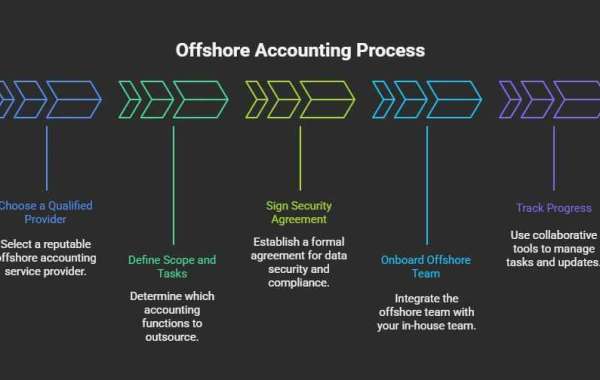
As client expectations rise and talent shortages continue, firms must find a staffing model that balances cost, efficiency, and quality. Understanding the difference between these two approaches helps firm owners make smarter, future-ready decisions. Let’s explore which option works best and how offshore staffing for accounting firm operations is changing the industry.
Understanding In-House Hiring
In-house hiring is the traditional staffing model where accounting firms recruit employees who work from the office or locally in a hybrid setup. These team members handle bookkeeping, tax preparation, audits, payroll, and client communication directly under the firm’s supervision.
This model offers direct control, face-to-face collaboration, and strong cultural alignment. Team bonding, real-time supervision, and quick communication are easier to manage. However, the costs associated with in-house hiring are significantly higher. Firms must cover salaries, employee benefits, office space, equipment, training, software licenses, and other overhead expenses.
Additionally, many accounting firms struggle to find qualified professionals locally, especially during peak seasons. Talent shortages often lead to overworked teams, missed deadlines, and employee burnout.
What Is Offshore Staffing?
Offshore staffing for accounting firm needs involves hiring skilled accounting professionals from other countries where labor costs are lower but expertise remains high. These offshore teams work remotely and support firms with tasks such as:
Bookkeeping and reconciliations
Tax preparation and filing support
Accounts payable and receivable
Payroll processing
Audit preparation
Financial reporting
Offshore staff function as an extension of the firm’s team, using secure systems and cloud-based tools to collaborate seamlessly.
Cost Comparison: A Major Deciding Factor
One of the biggest advantages of offshore staffing is cost savings. In-house employees come with high fixed costs, including benefits, insurance, and infrastructure. Offshore professionals, on the other hand, typically cost 40–60% less while delivering the same technical expertise.
For small and mid-sized firms, this cost difference can mean the ability to hire two or three offshore team members for the cost of one local employee. This allows firms to expand capacity without increasing overhead.
Lower staffing costs also improve profit margins and free up resources for technology upgrades, marketing, and business development.
Quality of Work: Busting the Myth
A common misconception is that offshore staffing compromises quality. In reality, many offshore professionals are highly qualified, experienced, and trained in international accounting standards. When firms implement structured onboarding, clear processes, and performance monitoring, offshore teams can deliver work that meets or exceeds expectations.
Modern collaboration tools, standardized workflows, and regular communication ensure quality control remains strong. Many firms report that offshore teams increase accuracy because they follow well-documented processes and focus on specialized tasks.
Flexibility and Scalability
In-house hiring is often slow and rigid. Recruiting, interviewing, onboarding, and training can take months. During peak seasons, this delay becomes a serious challenge.
Offshore staffing for accounting firm operations offers unmatched scalability. Firms can quickly add team members during tax season and scale down when workloads reduce. This flexibility allows firms to handle seasonal spikes without long-term financial commitments.
It also supports growth. Firms can take on more clients without worrying about office space or long hiring cycles.
Productivity and Turnaround Time
Time zone differences can actually work in favor of offshore staffing. While the local team logs off, offshore professionals can continue working. This creates a near 24-hour work cycle, improving turnaround times for bookkeeping, tax preparation, and reporting.
Faster delivery increases client satisfaction and gives firms a competitive advantage. In contrast, in-house teams are limited by local working hours, which can slow down output during busy periods.
Communication and Collaboration
In-house hiring offers the comfort of face-to-face communication, but modern technology has significantly reduced the communication gap with offshore teams. Video calls, project management tools, secure document sharing platforms, and instant messaging make collaboration smooth and efficient.
Successful firms establish clear communication routines, defined reporting structures, and shared task management systems. With these processes in place, offshore teams become just as integrated as in-house staff.
Data Security and Compliance
Security is a top concern for accounting firms handling sensitive financial data. Both in-house and offshore models can be secure when proper protocols are followed.
Reputable offshore staffing providers use secure servers, VPNs, encrypted systems, restricted access controls, and compliance with international data protection standards. Many firms find offshore partners invest heavily in security infrastructure because their business depends on trust.
With documented processes and regular audits, offshore staffing can be just as secure as in-house operations.
Employee Focus and Work-Life Balance
In-house teams often face burnout during busy seasons due to limited staff and increasing workloads. Offshore staffing reduces this pressure by distributing tasks more evenly.
When routine and time-consuming work is delegated offshore, in-house professionals can focus on higher-value tasks such as client advisory, relationship management, and strategic planning. This improves employee satisfaction and retention.
So, What’s Better?
There is no one-size-fits-all answer. In-house hiring works well for roles that require direct client interaction, leadership, and firm culture integration. However, offshore staffing for accounting firm growth offers clear advantages in cost savings, scalability, productivity, and access to a global talent pool.
The most effective approach for many firms today is a hybrid model. Core leadership and client-facing roles remain in-house, while offshore teams handle process-driven, time-intensive accounting tasks. This combination delivers the best of both worlds — control and cost efficiency.
Final Thoughts
As the accounting industry becomes more competitive and technology-driven, staffing strategies must evolve. Offshore staffing is no longer just a cost-cutting option; it is a strategic growth tool. Firms that adopt the right balance between offshore and in-house teams can improve profitability, increase efficiency, and deliver consistent, high-quality service to clients.
In the long run, the question is not whether offshore staffing replaces in-house hiring, but how smartly firms can combine both to build a stronger, more scalable future.