
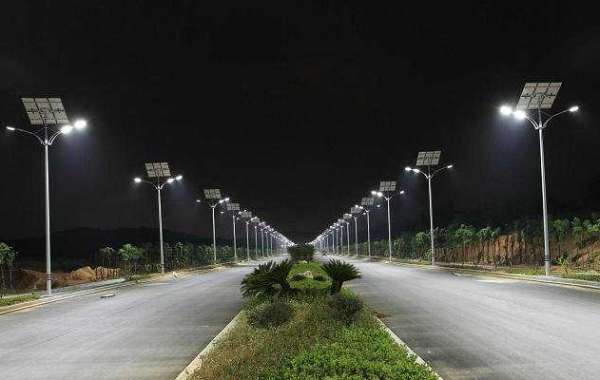
Done well, solar street lights in dubai can transform dark streets, parking lots, and community parks into safe, welcoming spaces—without trenching, cabling, or high monthly electricity bills. Done poorly, they become dim, failing poles that nobody trusts.
The difference almost always comes down to choosing the right product for the right location, and working with a partner who treats lighting as an engineered solution, not just a catalogue sale. Yanvi Solar often steps in where cheap, poorly specified lights have already disappointed a community or developer.
This guide walks you through the key decisions so you can choose confidently—whether you’re lighting a villa community, an industrial road, or a municipal project.
Start with the Application, Not the Wattage
Many buyers rush to buy solar street lights by “watts” because that’s how products are advertised (40 W, 60 W, 100 W, 200 W, etc.). In practice, watts are just power consumption, not brightness or coverage.
Think first about:
- What are you lighting—main roads, internal community streets, car parks, pathways, or playgrounds?
- How wide is the road?
- How high will the pole be?
- Is the priority vehicle safety, pedestrian comfort, or basic wayfinding?
As a starting point:
- Main urban roads typically need 3,000–5,000 lumens per pole at suitable spacing.
- Residential/community streets and pathways can often use 1,500–3,000 lumens.
A specialist like Yanvi Solar will translate these needs into proper lumen and optical requirements instead of just “more watts.”
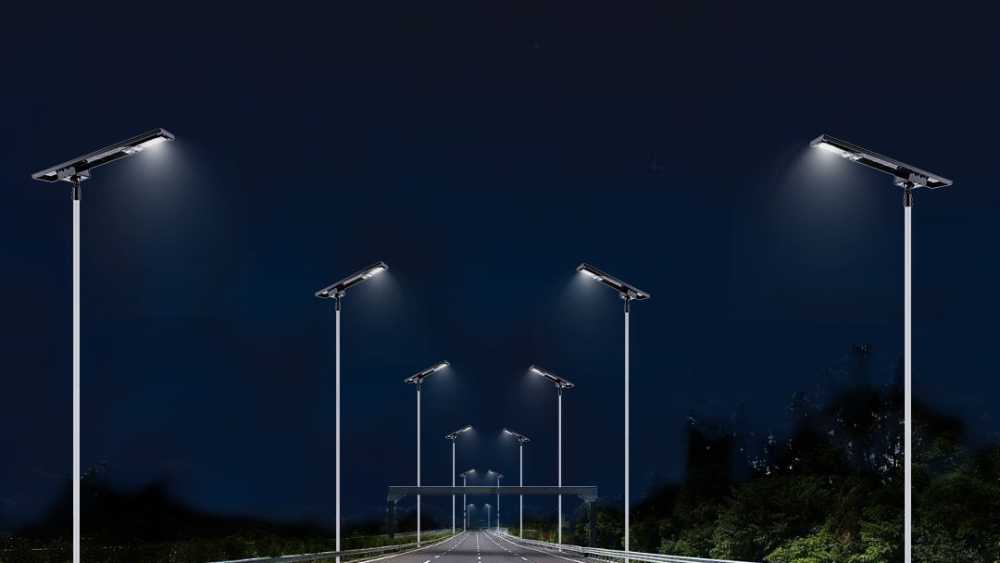
Understand the Main Types of Solar Street Lights in Dubai
You’ll usually encounter three broad categories:
1. All‑in‑one (integrated) lights
- Panel, battery, charge controller, and LED in one compact housing.
- Very fast to install and ideal when you want to buy solar street lights for smaller community projects or retrofits.
- Great for internal roads, parks, and car parks where aesthetics and speed matter.
2. Semi‑integrated lights
- Panel on top of the pole, with battery and LED in a separate housing.
- More flexible sizing of panel and battery; better for slightly higher loads and custom designs.
3. Traditional (separate) solar street systems
- Dedicated PV module, separate battery box, and LED luminaire with external controller.
- Often used for higher‑power or engineered road‑lighting projects, where optics, pole height, and spacing must meet standards.
For quick deployments and community lighting, Yanvi Solar often recommends high‑quality all‑in‑one units. For engineered roads or industrial zones, separate or semi‑integrated designs may be more appropriate.
Match Brightness, Optics, and Pole Height to the Road
A light that’s too bright wastes energy and creates glare; too dim, and it compromises safety.
Key parameters:
- Lumen output: Real, tested lumens matter more than watts. Quality units offer 130–170 lm/W efficacy.
- Optics: Roadway optics (T1–T5) shape the beam to cover the carriageway without wasting light on facades.
- Mounting height & spacing: Many 60 W–100 W integrated units specify 6–9 m pole height and 18–35 m spacing.
Practical example:
- A 6–8 m pole, with 60 W integrated LED (≈4,000+ lumens) spaced 20–25 m apart, can comfortably serve internal community roads or parking aisles.
Yanvi Solar will normally model a few pole heights and spacings to balance uniformity, brightness, and cost—especially when you’re ordering bulk solar street lights in dubai for a new development.
Don’t Ignore Battery and Autonomy
Battery quality is where many low‑cost products cut corners.
Look for:
- Battery chemistry: LiFePO₄ lithium batteries are now standard for quality solar street lights in dubai—they offer long cycle life, temperature tolerance, and compact size.
- Autonomy: You want at least 2–3 nights of backup (energy stored for days of cloud or dust), especially for critical roads.
- Depth of discharge and lifecycle: Better systems manage the battery to extend life beyond 5–7 years.
Cheap units often use small or low‑grade batteries; they look bright in year one but start failing or dimming much earlier than specified. Yanvi Solar advises checking battery specs as carefully as LED power.
Size the Solar Panel for Dubai’s Real Conditions
Dubai has abundant sun, but dust, summer heat, and occasional shading all affect performance.
Consider:
- Panel wattage vs load: Ensure the panel can fully recharge the battery even on hazy or dusty days. Many integrated 60 W units use around 70 W–80 W panels; higher‑power units scale accordingly.
- Panel efficiency and quality: Monocrystalline panels are common; check for Tier‑1 or reputable brands when ordering bulk solar street lights in dubai.
- Tilt and orientation: Panels mounted flat gather dust faster and may run hotter; a modest tilt improves both cleaning and performance.
For community‑scale projects, Yanvi Solar can factor in local insolation data and cleaning schedules to ensure year‑round reliability.
Choose the Right Control Strategy and Smart Features
Good solar street lights in dubai are not just “on” or “off.” Controllers and sensors matter.
Key features to evaluate:
- Light control (dusk‑to‑dawn): Automatically turns on at sunset and off at sunrise based on panel voltage.
- Time‑based dimming: Reduces brightness in low‑traffic hours to save energy and extend battery life.
- Motion sensors: Many integrated units include PIR/microwave sensors to boost brightness when movement is detected.
- Remote monitoring (optional): For larger road or city projects, remote status and control via a central platform can simplify maintenance and fault detection.
For a gated community or campus, simple time‑based dimming is usually enough. For main roads or smart‑city applications, Yanvi Solar can specify lights with advanced IoT features.
Pay Attention to Environmental and Mechanical Robustness
Dubai’s environment is harsh: high summer temperatures, dust, occasional rain, and corrosive coastal air.
Check:
- Ingress protection (IP): At least IP65 for outdoor luminaires and integrated units to prevent water and dust ingress.
- Housing material: Die‑cast aluminium with good thermal design is preferable for heat dissipation and durability.
- Operating temperature range: Ensure components are rated for high ambient temperatures typical of UAE summers.
- Pole and mounting: Poles must be properly galvanised and designed for wind loads on desert roads and open sites.
Good mechanical design protects your investment and reduces replacements—critical when you’ve deployed hundreds of poles.
Think in Systems When Buying in Bulk
When you buy solar street lights one or two at a time, it’s easy to focus on individual fixtures. When you’re procuring tens or hundreds for a road or community, think in systems.
System‑level questions:
- Are poles, foundations, brackets, and cabling (if any) included?
- Are the panel, battery, LED, and controller from compatible, reputable brands?
- Is there a standard design for pole spacing and location to avoid dark spots and glare?
- What is the warranty—just on electronics, or on the full system (including battery)?
Suppliers with a track record in UAE projects, like those highlighted in regional case studies, typically offer complete solutions—panel, battery, controller, LED, and poles—rather than just shipping boxes of fixtures.
Yanvi Solar can also link this to other services such as solar car‑park shading or rooftop systems for common areas.
Evaluate Supplier Experience, Not Just Unit Price
For community and municipal work, choosing the right partner is as important as choosing the right fixture.
Things to check:
- UAE and Dubai project experience: Look for executed road, community, or industrial yard lighting references in the region.
- Design support: Can they help with lighting layouts, lux calculations, and pole selection, or are they just shipping hardware?
- Stock and delivery capacity: For bulk solar street lights in dubai, you need a partner who can supply, not just promise—especially on phased developments.
- Service and spares: Are spare batteries, controllers, and LED modules available locally if something fails?
Yanvi Solar positions itself as a design‑plus‑supply partner: helping clients select, layout, and maintain solar lighting across roads, communities, and industrial sites.
Common Mistakes to Avoid
From the regional market experience and published best‑practice guides, a few mistakes stand out:
- Buying purely on wattage or price: A “200 W” no‑name light may deliver fewer lumens and fail faster than a well‑designed 80 W unit.
- Ignoring battery specs: Small or low‑quality batteries lead to dimming and short runtime within a year or two.
- Over‑spacing poles: Stretching distances to save money creates dark gaps and safety risks.
- Skipping pilots: For large projects, not testing a few units on‑site before full rollout can lock you into the wrong product.
- No maintenance plan: Even the best units need periodic cleaning and visual inspections.
Yanvi Solar typically recommends a small pilot section for new projects, then scaling up once performance is validated.
E‑E‑A‑T: What an Expert Partner Brings
Under an E‑E‑A‑T lens (Experience, Expertise, Authoritativeness, Trustworthiness), the right partner for solar street lights in dubai should provide:
- Experience: Demonstrated projects in roads, communities, and industrial facilities across UAE.
- Expertise: Ability to match lumen packages, optics, battery, and panel sizing to your specific roads and environments.
- Authority: Recognition as a reliable regional provider, with case studies and satisfied references.
- Trust: Clear warranties, transparent specifications, and support for installation, commissioning, and after‑sales.
Yanvi Solar can also cross‑reference you to allied services—rooftop solar for common areas, solar car‑park structures, and hybrid solutions—creating a coherent energy and lighting strategy instead of standalone purchases.
Conclusion
Choosing the right solar street lights in dubai is less about grabbing the biggest wattage on an e‑commerce listing and more about matching optics, lumens, battery, panel, and controls to the real needs of your roads and communities.
When you buy solar street lights, focus on application, brightness, battery autonomy, environmental robustness, and the quality of the supplier—not just unit price. For larger community or road projects, treat lighting as a system: poles, spacing, optics, and maintenance all matter, especially when ordering bulk solar street lights in dubai.
With an engineered approach and a specialist partner like Yanvi Solar, you can deliver reliable, low‑maintenance lighting that keeps residents safe, streets attractive, and long‑term operating costs under control in Dubai’s demanding climate.